Netherlands (September 29 - October 2, 2024)
On this excursion, we will focus on the Roman road and border system of Germania Inferior. We will first travel along the Via Belgica to the Domburg canal crossing with a stopover at the Thermenmuseum in Heerlen. On the following day, we will travel to the end point of the Limes (Katwijk) and then visit the Rijksmuseum van Oudheden in Leiden. On the third day, we will travel along the Limes towards Nijmegen with a few stops along the way, such as at the Archeon in Alphen and at various forts. The last day will be dedicated to ancient Nijmegen (Ulpia Noviomagus Batavorum). In addition to a tour of the city, we will visit the Orientalis Museum Park before returning to the Barbaricum. For the excursion, presentations on the individual stations are to be prepared with a written elaboration for the reader. This paper must be available in advance so that the reader can be designed. There will be a planning meeting at which we will clarify all other organizational matters relating to the trip, such as content aspects. A personal contribution of approx. 300.00 € must be made, the exact amount will be announced.
Excursion report
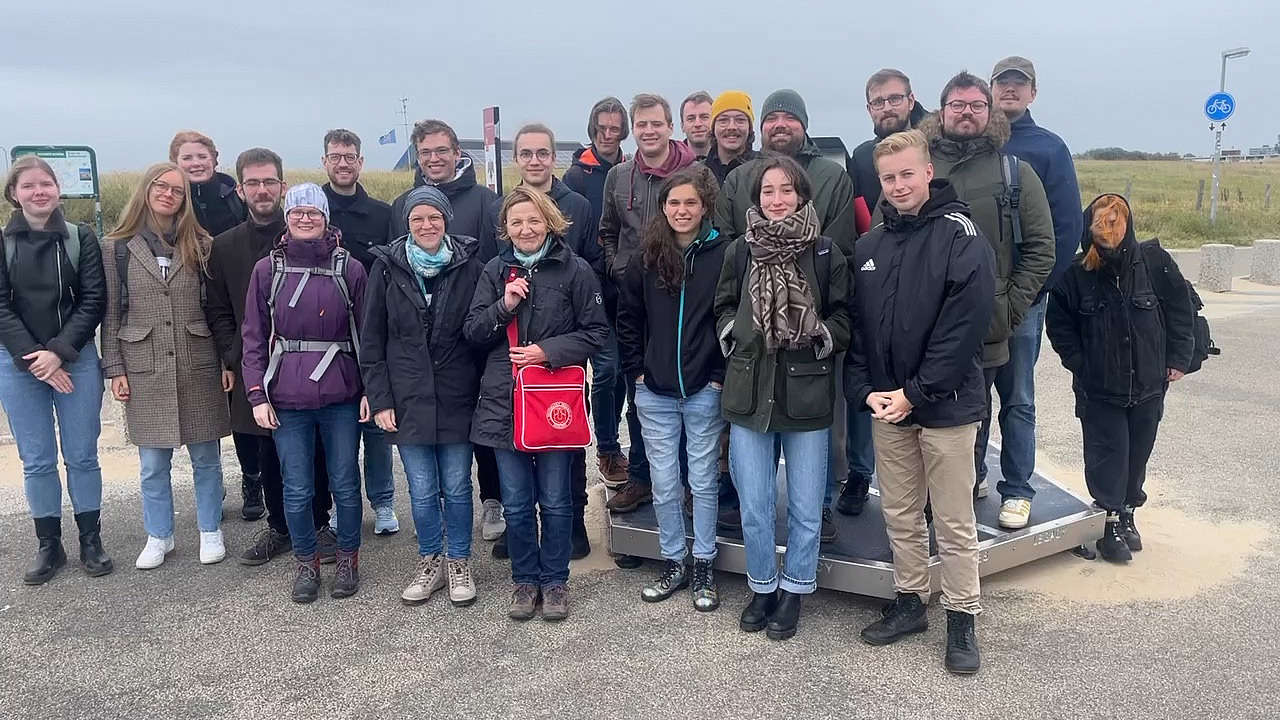
From 29.09. to 02.10.2024, Ancient History was on the road again, this time to Germania Inferior. From Barbaricum, we headed south towards the provincial capital, the CCAA (Colonia Claudia Ara Agrippinensium), in order to reach the Via Belgica from there. We headed west along the Tomb Road.
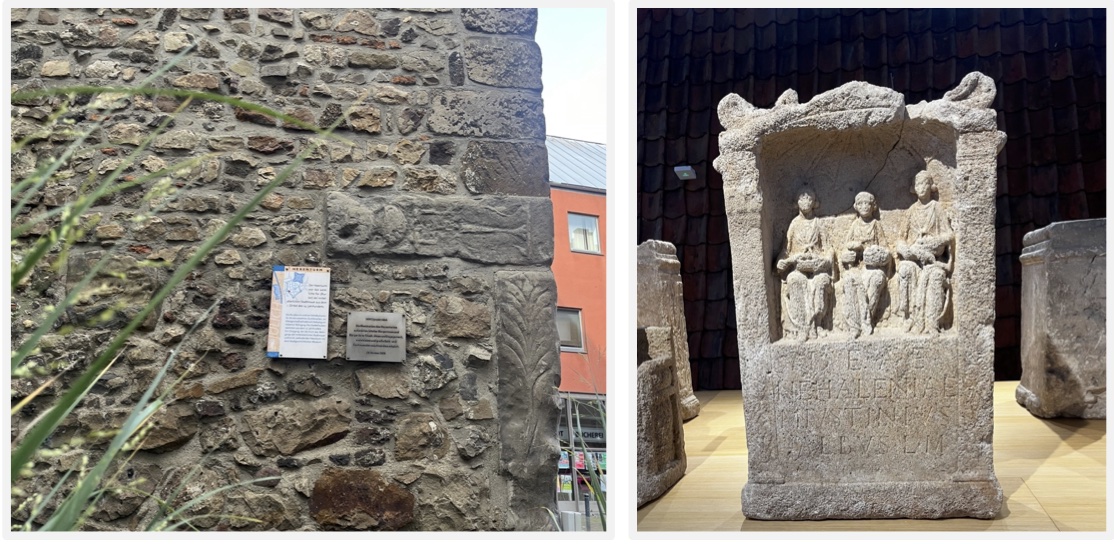
We passed the funerary monument in Weiden and made a stopover at an ancient milestone near Jülich, the ancient Iuliacum, before taking a look at Jülich itself. In the western city gate, the so-called Hexenturm, we then discovered stones from Roman times (spolia stones), including an equestrian tomb. We then continued north-west (we had originally planned to visit the thermal baths in Heerlen, which are unfortunately completely closed due to construction work). We left the Via Belgica to take the (now) direct route to the Nehalennia sanctuary in Colijnsplaat. Although only visible as a reconstruction, the sanctuary was very impressive and the group learned a lot about the different cults in Germania Inferior and the mixing of local and Roman cults, such as the inclusion of matron symbolism. We spent the first night in a tranquil little water castle, which had been converted into a hostel, in Domburg just behind the dunes, where we learned a lot about space and cult.
The next morning we continued towards the Limes. We crossed the Scheldt, Waal and Rhine (Oude Rijn) and started our Lower Germanic Limes expedition at the far end of the Limes, in Katwijk/Brittenburg (Lugdunum Batavorum), where there was once a fort with a harbor and a vicus. Unfortunately, we had to miss out on the Auxiliary Fort in Valkenburg (Praetorium Agrippinae) due to time constraints, as we had managed to get a guided tour of the legendary Rijksmuseum van Oudheden in Leiden at 14:00 and were able to marvel at the numerous objects there, not only from Germania Inferior. After the museum visit, we made a short stop in Leiden-Roomburg in Park Matilo, another reconstructed Auxiliary fort, before heading to our accommodation in Alphen. The dimensions of such a camp were particularly clear to see here.
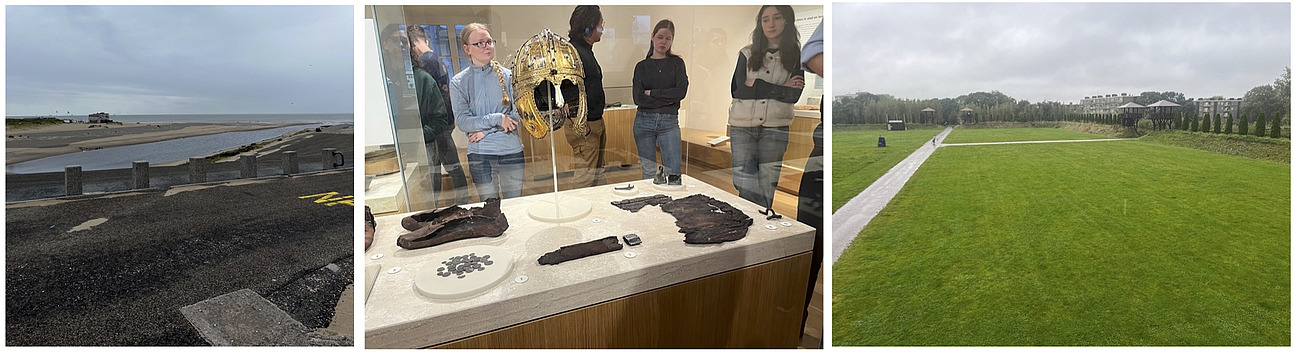
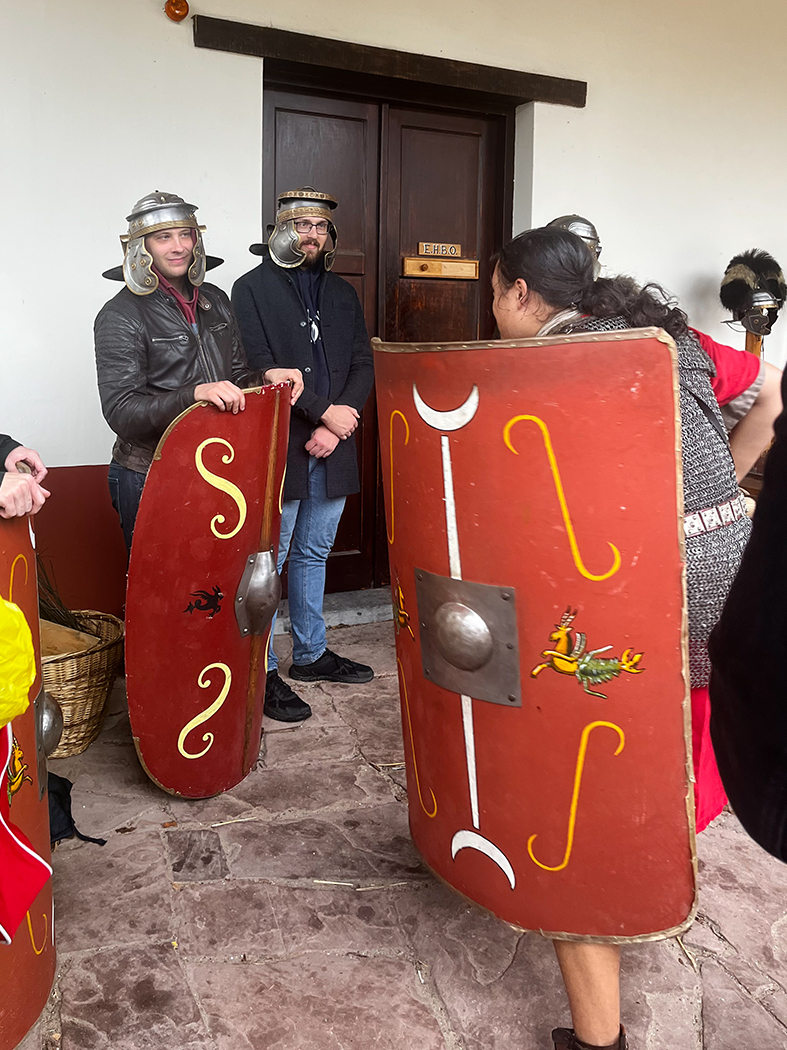
The next day started with a tour of Alphen (Albaniana) to find the location of the cohort fort. Numerous clues such as street names and flags with Roman motifs indicated the exact location, so it was possible to trace it quite quickly. We walked on to the Archeon, an archaeological theme park that ranges from the Stone Age to the Middle Ages and brings the past to life in various ways. Fans of other eras also got their money's worth here. First we visited the small - but fine - museum, then we went to the Roman area. Once there, we were welcomed by a member of the park staff and given a demonstration of Roman weaponry. Some students were also prepared to wear helmets and shields. The employee was replaced by a colleague who showed us a reconstruction of the thermal baths in Heerlen, showed us a real Roman ship and gave us an insight into her current research. This alone made the Archeon worthwhile. In the afternoon, the journey continued along the Limes, unfortunately past Utrecht (Traiectum), to the Waterline Museum and Fort Vechten (Fectio), where, among other things, a Roman fort stood. After a general introduction, our guide took us to the fort, gave us time to look around and interpret and discussed our questions with us. We then had time to look around the museum. We then went on to the Ulpia Noviomagus Batavorum, where we spent the night with a view of the Waal.
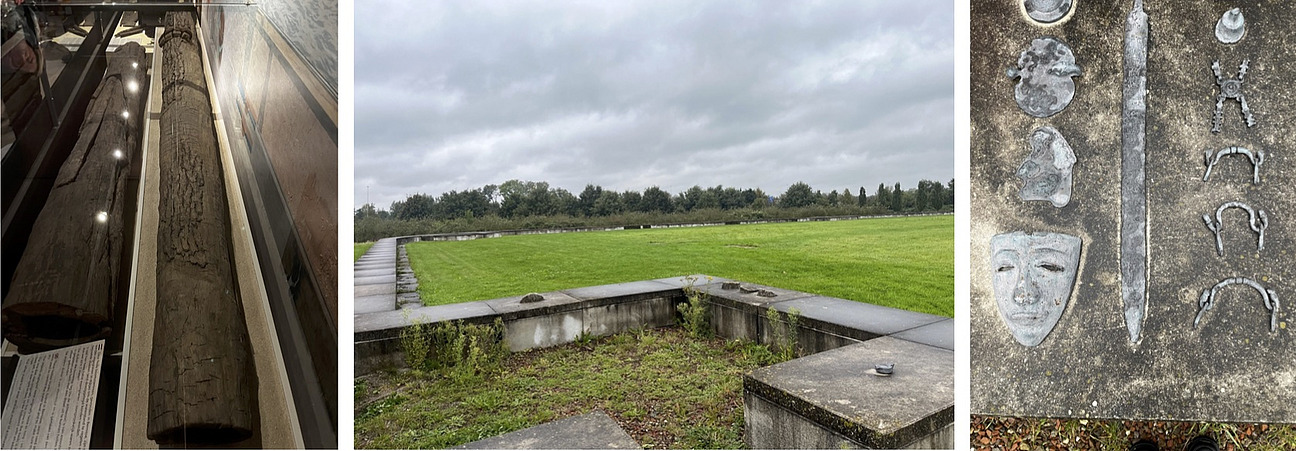
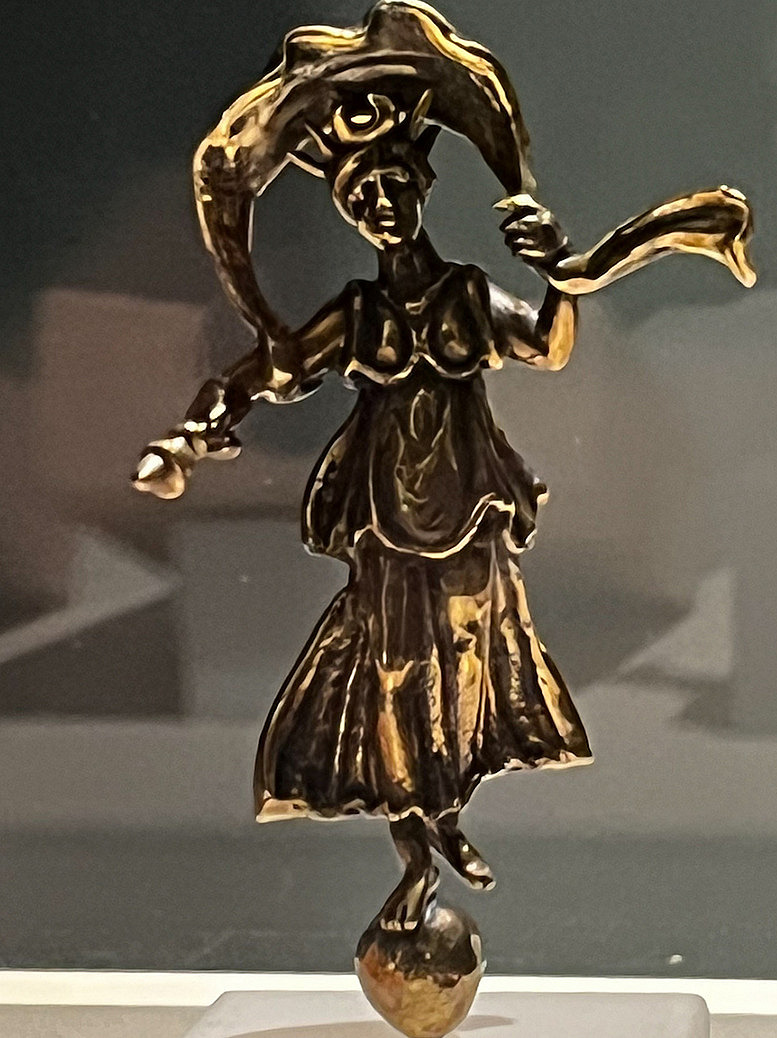
On the last day, we went on an expedition through the city. We first explored the location of the ancient harbor and then walked along the tomb road and the settlement to the ancient city, of which unfortunately nothing can be seen today and we were unfortunately unable to continue our expedition due to deafening construction work in the area. We then visited the Valkhof Museum (the actual Het Valkhof Museum was also closed), where we were given time to take a closer look at a number of exhibits, such as a half-destroyed inscription and a small bronze statuette or the Lead Lady. In the afternoon, we made our way home with a short detour to the Hunnerberg and the Kopsplateau, where ancient military camps must have been located.
All in all, it was a very exciting and informative trip, which gave us an understanding of the Lower Germanic topography, the ancient road network and border issues. Many things from the theory only really became clear in the room, which is why the trip was extremely worthwhile in addition to the museum visits and fort tours.