Current Publications

Working Group Modern History and Historical Migration Research
Prof. Dr. Christoph A. Rass
[IMIS] [SFB1604] [HistOS]

Migrating Concepts: The Transatlantic Origins of the Bracero Program, 1919-42

 Migrating Concepts: The Transatlantic Origins of the Bracero Program, 1919–42 

Julie M Weise and Christoph Rass:

The American Historical Review, Volume 129, Issue 1, March 2024, Pages 22–52,  https://doi.org/10.1093/ahr/rhad500


How do migration policy ideas and concepts spread transnationally? How do different actors observe discussions and developments and transport their knowledge to other discourse spaces? How do such translations change the production of the meaning of migration?

Prof. Dr.  Julie M. Weise, historian at the University of Oregon, Eugene, and Prof. Dr.  Christoph Rass from the Institute for Migration Research and Intercultural Studies (IMIS) at Osnabrück University discuss questions such as these in their LASA 2025 award-winning essay.

Cover of the journal Ethnic and Racial Studies.

Displaced person(s): the production of a powerful political category

 Sebastian Huhn &  Christoph Rass:
Displaced person(s): the production of a powerful political category, in:  Ethnic and Racial Studies Volume 48, 2025 -  Issue 4 : Special Issue: Contested Categories in the Context of International Migration, Pages 718-739 | Received 06 Dec 2023, Accepted 09 Sep 2024, Published online: 09 Oct 2024.


Recent migration research suggests using "displaced persons" as a broader, more inclusive term than "refugees", affording us an opportunity to recall the historical genesis and transformation of the concept of "displaced persons". The concept emerged in the 1940s in the context of the control of forced migration. This article traces the evolution of the term "displaced person", arguing it was created as a "category of action" for bureaucratic and political purposes, rather than to describe social realities. Understanding this historical context reveals more broadly how such categories have always been tools for political control, underscoring the need for reflexivity in migration studies.

Cover of the book "Burnt Villages"

„Bandenbekämpfung“ und „Verbrannte Dörfer“. Perspektiven der digitalen Geschichtswissenschaft auf Vernichtungskrieg und Besatzung in Belarus 1941–1944

Christoph Rass, Aliaksandr Dalhouski & Lukas Hennies:
„Bandenbekämpfung“ und „verbrannte Dörfer“: Perspektiven der digitalen Geschichtswissenschaft auf Vernichtungskrieg und Besatzung in Belarus 1941–1944, in: Frèdèric Bonnesoeur, Florian Wieler u.a. (Hg.): Verbrannte Dörfer. Nationalsozialistische Verbrechen an der ländlichen Bevölkerung in Polen und der Sowjetunion im Zweiten Weltkrieg, Berlin 2024.


The essay analyzes a data set from Belarus that contains information on over 9,000 villages affected by the National Socialist war of extermination and the Shoah and spans an arc to the memory landscape of German occupation and exploitation in Belarus during the Second World War.


Cover of the publication "Exile, Flight, Migration".

Displacement und Displaced Persons

Sebastian Huhn/Christoph Rass:
Displacement und Displaced Persons, in: Exil, Flucht, Migration. Konfligierende Begriffe, vernetzte Diskurse?, Jahrbuch für Exilforschung (40/2022), S. 38-49.


Where does the term "displacement" actually come from and how did it become the meaningful element of the category "displaced person", which became central to the regulation of violence-induced mobility and its subsequent migrations as early as, but especially immediately after, the Second World War and still reverberates today in the figure of the "internally displaced person" (IDP)?

 Sebastian Huhn and  Christoph Rass explore this question in an article just published in the  Jahrbuch für Exilforschung, which, in the spirit of the translational turn , examines translation processes in the context of concept formation and the production of meaning and thus also presents the research findings of the Osnabrück working group Negotiating Migrationworking group.

The 40th volume of the yearbook, edited by Burcu Dogramaci, Bettina Bannasch and Doerte Bischoff, sees itself as an anthology of conceptual history that aims to sensitize readers to "the implications of concepts and narratives (...) in an interdisciplinary way".

Das Bild zeigt einen hellgrauen Hintergrund mit rotem und schwarzem Text. Oben steht in roter Schrift "IMIS Working Papers". Darunter in kleinerer schwarzer Schrift "17/2023". Darunter in größerer schwarzer Schrift "‘Gastarbeiter’ – ‘Guest Worker’". Darunter in kleinerer Schrift "Translating a Keyword in Migration Politics". Unten steht in schwarzer Schrift "Christoph Rass".
© Neueste Geschichte und Historische Migrationsforschung, Universität Osnabrück

‘Gastarbeiter’ – ‘Guest Worker’

Rass, Christoph:
 ‘Gastarbeiter’ – ‘Guest Worker’. Translating a Keyword in Migration Politics.
IMIS Working Paper 17, Institut für Migrationsforschung und Interkulturelle Studien (IMIS) der Universität Osnabrück. Osnabrück: IMIS, 2023.


This paper explores how the word 'Gastarbeiter' - a key concept in the German lexicon of the cultural, social, and political production of migration - was translated into American English as 'guest worker' between the late 1960s and the early 1980s. We follow the figure of the 'guest worker' and the idea of 'guest worker programs' as they became adopted as American and later universal concepts. We observe not only how they accumulated meaning and became instrumental in assigning specific social roles to those read as migrants but also the part they played in the production of migration policies, the negotiation of migration and diversity, and the framing of policy narratives.

Das Bild zeigt den Einband eines Buches. Der Hintergrund ist grau mit einem dunkleren Streifen oben und unten. In der Mitte steht in schwarzer Schrift "Konfliktlandschaften interdisziplinär lesen". Darüber steht in kleinerer Schrift "Christoph Rass/Mirjam Adam (Hg.)", was auf die Herausgeber hinweist. Unten steht in noch kleinerer Schrift "Universitätsverlag Osnabrück", was den Verlag angibt.
© Neueste Geschichte und Historische Migrationsforschung, Universität Osnabrück

Konfliktlandschaften interdisziplinär lesen

Christoph Rass & Mirjam Adam (Hg.):
Konfliktlandschaften interdisziplinär lesen. Göttingen: V&R/Brill [Universitätsverlag Osnabrück] 2022.


Violent events fundamentally reshape landscapes and places. The contributions collected in this volume open up interdisciplinary perspectives on the ways in which violence materially changes its sites and how narratives and discourses, events and actors relate to each other. The case studies range from antiquity to the Middle Ages to modern times and address battlefields, militarized borders and sites of violence and extermination of the Shoah. In the understanding of the Interdisciplinary Working Group on Conflict Landscapes (IAK) at Osnabrück University, the aim is to integrate approaches from the natural sciences, social sciences and cultural studies in order to make the interactions between the material and discursive levels tangible in a process of continuous transformation of the resulting historical sites.

Das Bild zeigt einen dunkelgrauen Hintergrund mit weißem und rotem Text. Oben steht in kleiner Schrift "Frank Müller". Darunter steht in größerer Schrift "Einer gewaltigen Übermacht ehrenvoll unterlegen ...?". Darunter in kleinerer Schrift: "Militaria-Literatur über den Zweiten Weltkrieg am Beispiel des Kriegsschauplatzes Nordfeld / Hürtgenwald". Unten steht "Universitätsverlag Osnabrück"
© Neueste Geschichte und Historische Migrationsforschung, Universität Osnabrück

"Einer gewaltigen Übermacht ehrenvoll unterlegen...?"

Frank Möller:
"Einer gewaltigen Übermacht ehrenvoll unterlegen...?" Militaria-Literatur über den Zweiten Weltkrieg am Beispiel des Kriegsschauplatzes Nordeifel/ 'Hürtgenwald'. Göttingen: V&R/ Brill (Universitätsverlag Osnabrück) 2022.


Frank Möller analyzes ten titles of German militaria literature that deal with the fighting in the final phase of the Second World War in the Northern Eifel and the 'Hürtgenwald'. Using these books, the author debunks the narrative that right-wing and right-wing extremist circles have been spreading for decades about the events of the Second World War. In fact, the titles presented are a widely used means of imposing a revisionist view of history and thus influencing politics. The detailed analysis reveals the sources, intentions and target groups of the works and at the same time the circles of supporters of the militaria scene. Based on this, the author puts forward ten theses that stimulate further discussion. Essential reading for anyone who wants to understand the right's understanding of history and take action against it

Negotiating the Aftermath of Violence Induced Mobility in the Wake of the Second World War

Christoph Rass & Ismee Tames (Hg.):
Negotiating the Aftermath of Violence Induced Mobility in the Wake of the Second World War. Rethinking Sources, Methods and Approaches from the Intersection of War and Migration Studies in the Digital Age,   Historical Social Research (HSR) Special Issue (45.4/2020).


The 20th century has been labelled a "century of refugees." It has not only brought forth mass displacement of humans on an unprecedented scale, but also all those concepts and definitions by which the phenomenon is described, judged, and narrated, and the institutions, politics, and policies that it dealt with. This shaped our perception of "refugees," "refugee-crisis," and the "management" of both at the beginning of the 21st century. The 20th century fused mass displacement, the collective and institutionalized - often international and state sponsored - responses, and the construction of concepts for describing and shaping its realities into an inseparable trinity.

Das Bild zeigt den Einband eines Buches mit einem roten Hintergrund. In schwarzer Schrift steht der Titel "Hinter Mauern". Darunter steht in kleinerer Schrift "Geschlossene Grenzen als Gefahr für die offene Gesellschaft". Am unteren Rand des Einbands steht "Von Volker M. Heins", was den Autor angibt.
© Neueste Geschichte und Historische Migrationsforschung, Universität Osnabrück

Hinter Mauern

Volker M. Heins und Frank Wolff:
Hinter Mauern: Geschlossene Grenzen als Gefahr für die offene Gesellschaft.
edition suhrkamp 2807. Berlin: Suhrkamp, 2023.


"We have to endure these images," said Saxony's Minister President Michael Kretschmer in November 2021 in the face of freezing refugees on the border between Poland and Belarus. His words make clear what is often forgotten: borders are not just obstacles for people who want to cross them from outside. They also change the societies that try to seal themselves off.
Volker M. Heins and Frank Wolff show what effect walls and the defense against migration have "internally": The EU's insistence on "secure external borders" undermines the European promise of peace and the rule of law. Ultimately, fortified borders endanger the very democratic values and structures they claim to protect.

Das Bild zeigt den Einband eines Buches mit einem dunkellila Hintergrund. In weißer Schrift steht der Titel "Jewish Encounters with Buddhism in German Culture". Darunter steht in kleinerer Schrift "Between Moses and Buddha, 1890-1940". Am unteren Rand des Einbands steht der Name des Autors "Sebastian Musch".
© Neueste Geschichte und Historische Migrationsforschung, Universität Osnabrück

Jewish Encounters with Buddhism in German Culture Between Moses and Buddha, 1890–1940

Sebastian Musch:
Jewish Encounters with Buddhism in German Culture Between Moses and Buddha, 1890-1940. Palgrave Series in Asian German Studies. Cham: Palgrave 2019.


In Germany at the turn of the century, Buddhism transformed from an obscure topic, of interest to only a few misfit scholars, into a cultural phenomenon. Many of the foremost authors of the period were profoundly influenced by this rapid rise of Buddhism-among them, some of the best-known names in the German-Jewish canon. Sebastian Musch excavates this neglected dimension of German-Jewish identity, drawing on philosophical treatises, novels, essays, diaries, and letters to trace the history of Jewish-Buddhist encounters up to the start of the Second World War. Franz Rosenzweig, Martin Buber, Leo Baeck, Theodor Lessing, Jakob Wassermann, Walter Hasenclever, and Lion Feuchtwanger are featured alongside other, lesser known figures like Paul Cohen-Portheim and Walter Tausk. As Musch shows, when these thinkers wrote about Buddhism, they were also negotiating their own Jewishness.

Das Bild zeigt einen schwarzen Hintergrund mit rotem Text. Oben steht in großer Schrift "Frank Wolff". Darunter steht in noch größerer Schrift "Die Mauergesellschaft".
© Neueste Geschichte und Historische Migrationsforschung, Universität Osnabrück

Die Mauergesellschaft

Frank Wolff:
Die Mauergesellschaft. Kalter Krieg, Menschenrechte und die deutsch-deutsche Migration 1961-1989, stw 2279, Berlin: Suhrkamp, 2019.


The Wall not only secured a border, it defined Germany during the Cold War. From active support to silent acceptance to resistance, the divided German society was united by the fact that it could not escape its existence. In his brilliant and fact-saturated study, historian Frank Wolff traces these conditions in detail and shows, among other things, that the demand for freedom of travel, which was rather neglected in the reappraisal of the GDR past, the human rights discourse that developed among the population as a result and the emigration movement itself were decisive for the fall of the Wall.

Das Bild zeigt einen hellblauen Hintergrund mit rotem Text. Der Text lautet: "Migration ein Bild geben". Darunter in kleinerer Schrift: "Visuelle Aushandlungen von Diversität"
© Neueste Geschichte und Historische Migrationsforschung, Universität Osnabrück

Migration ein Bild geben

Christoph Rass & Melanie Ulz (Hg.):
Migration ein Bild geben. Visuelle Aushandlungen von Diversität, Wiesbaden 2018.


What images do societies create of migration? What significance do the resulting imageries have for the negotiation of identity and belonging under the condition of increasing diversity? This volume brings together contributions from a wide range of disciplines in interdisciplinary migration research. The authors examine visualization processes from a cultural and social science perspective and work out the power of images in different media formats as constructions of reality that shape the way we deal with migration and social change. This book opens up an interdisciplinary field by means of exemplary explorations that develop the theoretical and methodological potential of migration research informed by visual culture studies.


Das Bild zeigt einen hellblauen Hintergrund mit rotem Text. Der Text besteht aus zwei Fragen, einmal auf Deutsch und einmal auf Englisch. Auf Deutsch steht: "Was ist ein Migrationsregime?". Darunter auf Englisch: "What Is a Migration Regime?".
© Neueste Geschichte und Historische Migrationsforschung, Universität Osnabrück

Was ist ein Migrationsregime?

Andreas Pott/Christoph Rass/Frank Wolff (Hg.):
Was ist ein Migrationsregime? What Is a Migration Regime?, Wiesbaden 2018.


The term migration regime is very popular. It promises an analytical approach to the complexity of the relationship between migration and regulation. However, it is used and interpreted in very different ways. The editors of this anthology understand this polyphony as a call for debate. Building on a lengthy process of exchange at conferences and workshops, they have invited researchers representing central disciplines of interdisciplinary migration research and their different perspectives to discuss the basic assumptions, potentials and challenges of the approach. The resulting critical insights into a key concept of modern migration studies shed light on ways in which questions of power distribution, agency and negotiation can be incorporated more systematically into migration research.

Das Bild zeigt den Einband eines Buches mit einem dunklen, verschwommenen Hintergrund. In weißer Schrift steht der Titel "POLITICS AND HISTORY OF VIOLENCE AND CRIME IN CENTRAL AMERICA". Darunter steht in kleinerer Schrift "Edited by Sebastian Huhn and Hannes Warnecke-Berger"
© Neueste Geschichte und Historische Migrationsforschung, Universität Osnabrück

Politics and History of Violence and Crime in Central America

Sebastian Huhn & Hannes Warnecke-Berger (Eds):
Politics and History of Violence and Crime in Central America, Palgrave Macmillan, 2017.


This book highlights historical explanations to and roots of present phenomena of violence, insecurity, and law enforcement in Central America. Violence and crime are among the most discussed topics in Central America today, and sensationalism and fear of crime is as present as the increase of private security, the re-militarization of law enforcement, political populism, and mano dura policies. The contributors to this volume discuss historical forms, paths, continuities, and changes of violence and its public and political discussion in the region. This book thus offers in-depth analysis of different patterns of violence, their reproduction over time, their articulation in the present, and finally their discursive mobilization.

Das Bild zeigt einen dunkelgrauen, strukturierten Hintergrund mit weißem Text. Oben steht in kleiner Schrift "Christoph Rass". Darunter steht in größerer Schrift "Das Sozialprofil des Bundesnachrichtendienstes". Darunter in kleinerer Schrift: "Von den Anfängen bis 1968".
© Neueste Geschichte und Historische Migrationsforschung, Universität Osnabrück

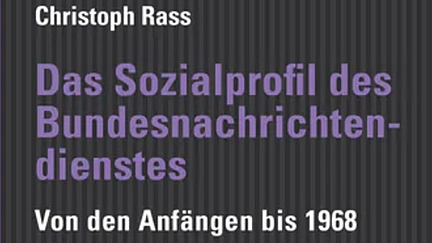
Das Sozialprofil des Bundesnachrichtendienstes

Christoph Rass:
Das Sozialprofil des Bundesnachrichtendienstes. Von den Anfängen bis 1968, Berlin 2016.


This book answers the question of how biographical influences from the Third Reich influenced the BND from its beginnings in 1946 to 1968. Based on 3650 biographies, it also reconstructs the social composition of the secret service and its changes in great detail over two decades. The study does not offer "agent histories", but rather a structural analysis of the personnel composition of an important agency of the young Federal Republic and provides a deep insight into the after-effects of the Nazi era. This empirically well-founded social profile analysis provides a hitherto unique basis for a differentiated understanding of the inner workings of a secret service.

Interdisziplinäre Annäherung an gewaltüberformte Orte

Results from the field research of the Interdisciplinary Working Group Conflict Landscapes at Osnabrück University can now be read in the journal  Antiquity:

Andreas Stele, Malte Schwickert, Christoph Rass: The battle of Vossenack Ridge: exploring interdisciplinary approaches for the detection of U.S. Army field positions on a Second World War battlefield, in Antiquity (2021).

Justus Möser und das Denken über Migration

On the occasion of Justus Möser's 300th birthday, a new anthology summarizes current research on the publicist, jurist and statesman from Osnabrück.

Including Christoph Rass: Movement in a small world. Justus Möser as a thinker of an early modern migration regime, in:  'Es hat also jede Sache ihren Gesichtspunct ...'. New perspectives on Justus Möser, edited by Ulrich Winzer and Susanne Tauss, Münster 2020.

International Migration

In the  SAGE Handbook of Political Science, Christoph Rass writes the article on "International Migration.

Christoph Rass: International Migration, in: Handbook of Political Science, edited by Dirk Berg-Schlosser, Bertrand Badie and Leonardo Morlino, London 2020.