ECORISK | Research Training Group
Welcome to Ecorisk!
ECORISK delves into the causes and consequences of ecological regime shifts in socio-ecological systems. Rapid socio-economic changes have tightly interconnected ecosystems and human activities, leading to systemic risks. These regime shifts, sudden transitions in ecosystems, can trigger cascading effects globally. ECORISK, with its interdisciplinary team and holistic approach, investigates these shifts, their risks, and how different actors perceive them. It focuses on ecosystem dynamics, human activities, and governance, using intensive agriculture as a guiding example. Case studies span regions in Europe, the US Midwest, and South America, examining contrasting contexts. By integrating research and doctoral training, ECORISK aims to generate novel insights and equip a new generation of scientists to tackle complex environmental and societal challenges effectively.
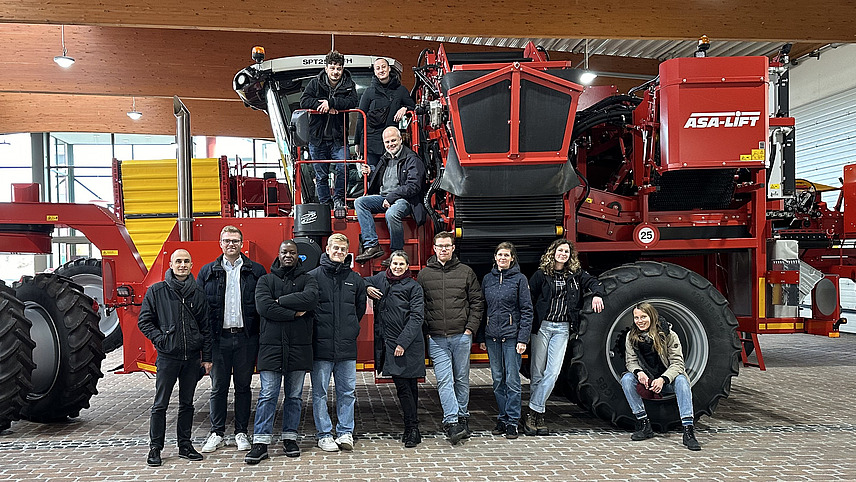
Apply now for one of ten vacancies!
Click below to go directly to the Research Assistant/PhD Candidate (m/f/d) (pay grade E13 TV-L, 75%) vacancies within the sub-projects:
B1b. Regime shifts and human behaviour in agricultural systems (English)
B1b. Regime shifts and human behaviour in agricultural systems (Deutsch)
B4b. Understanding non-adaptation to systemic risks (English)
B4b. Understanding non-adaptation to systemic risks (Deutsch)
C2. The emergence of collective action: the role of narratives in social networks (English)
C2. The emergence of collective action: the role of narratives in social networks (Deutsch)
C3b. Governance designs in telecoupled problem situations (English)
C3b. Governance designs in telecoupled problem situations (Deutsch)
C4. Governance of mitigation strategies for systemic risks (English)
C4. Governance of mitigation strategies for systemic risks (Deutsch)
Click here to go the university's central website for jab vacancies (English)
Click here to go the university's central website for jab vacancies (Deutsch)
Found quickly!
On this page we present our sub-projects
Here you find background information on the RTG
Do you have a questions? Get in touch with us
Click here to go the university's central website
To stay updated, please check out our Instagram page and LinkedIn page