Oliver Schütte
Oliver Schütte joined the ECORISK Research Training Group as a PhD student in January 2025. Oliver’s project focuses on using freely available satellite data to classify agricultural land management archetypes in aquatic ecosystems. His research helps to understand how regime shifts and systemic risks emerge in response to agricultural land use.
Prior to his PhD studies, Oliver studied Geoinformatics and Environmental System Sciences as a dual major Bachelor’s degree and Geoinformatics as a Master’s degree at the University of Osnabrück. During his studies, Oliver focused on land use and land cover (LULC) classification using multiple types of satellite imagery and the use of Mask R-CNN based instance segmentation for the identification of individual tree crowns. In his master thesis entitled “Mapping of Urban Vegetation with High-Resolution Remote Sensing Imagery and Deep Learning”, Oliver analysed the potential of deep learning models for individual tree crown delineation in various complex urban environments in Berlin.
During his studies, Oliver worked as a student assistant in the working group “Remote Sensing and Digital Image Analysis” and gained valuable insights into scientific research in several agricultural themed projects. Furthermore, Oliver has been an elected member of the student council in Geoinformatics from 2019 to 2024 and the head of the student council from April 2022 to March 2024.
Mapping land management archetypes by multisensor remote sensing data and machine learning
Project affiliation: A1
Oliver Schütte
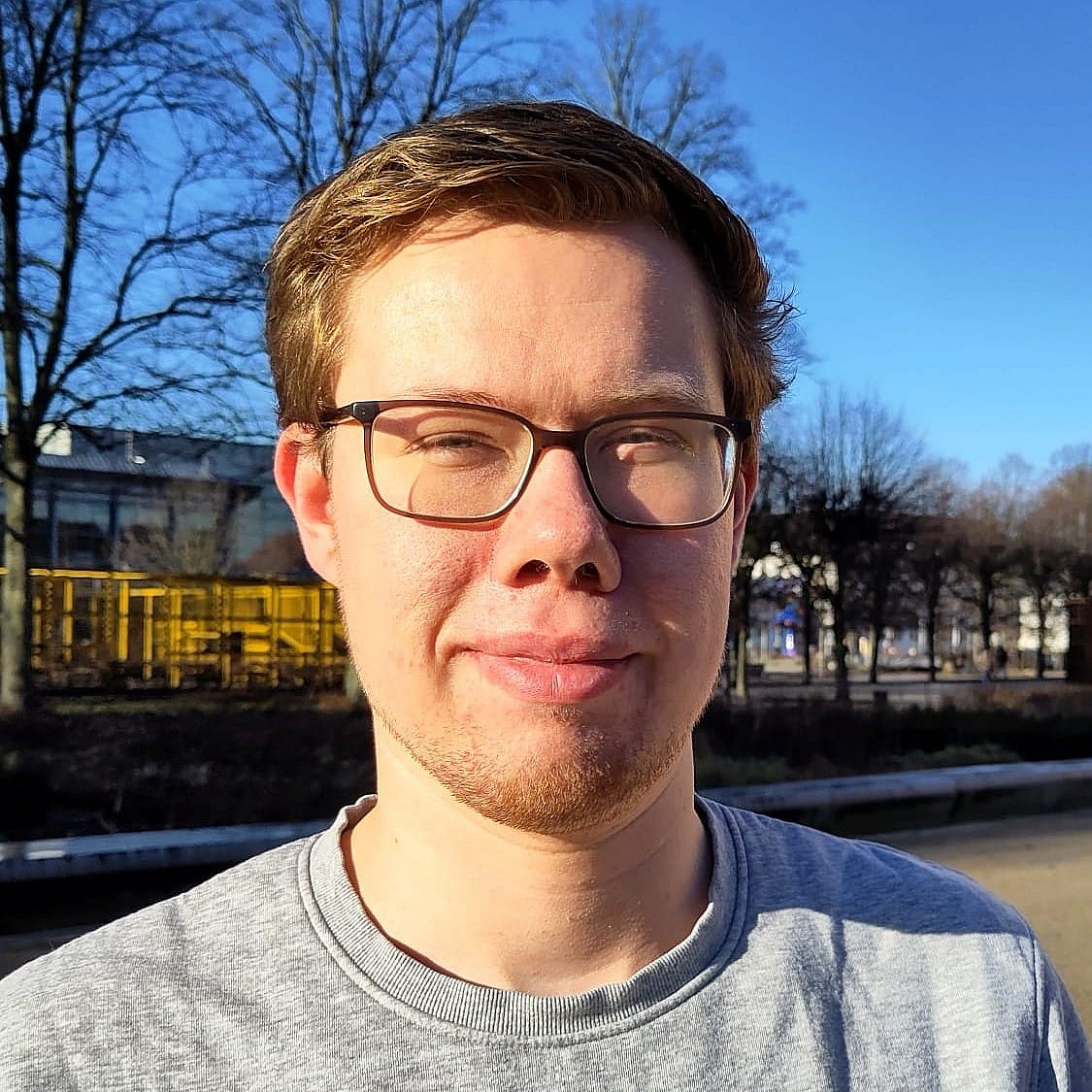
Doctoral Researcer
Institute of Computer Science
IUSF
Seminarstraße 33
49074 Osnabrück
Room: 04/112
oliver.schuette@uni-osnabrueck.de
Member of the Remote Sensing and Digital Image Processing Working Group
Schütte, O., Lucas, M. & Waske, B. (2025): Individual Tree Crown Delineation in Heterogenous Urban Environments using High-Resolution Airborne Imagery. IEEE Journal of Selected Topics in Applied Earth Observations and Remote Sensing, early access, 1-17. https://doi.org/10.1109/JSTARS.2025.3626942