Alternative examination forms
The memory of my last oral exam is not so pleasant: after switching off the camera, I lie down on the floor. I stay like that for about half an hour. Until I'm breathing normally again. I almost knew the book by heart and I was able to answer almost every question when preparing with friends. But then: blackout. I can't remember how long I stared wordlessly at the screen. After all, I narrowly passed in the end.
Almost everyone experiences this feeling at least once in their life: Exam anxiety. There are many reasons for this, but it also has to do with the type of exam - according to the Institute for Contemporary Examination Culture in Berlin. Exams in which control is relinquished or little support is offered are often perceived as stressful and can trigger exam anxiety.
Two lecturers at the university show that it is about more than pressure and memorization: Prof. Dr. Peter Grundke from Business Administration and Economics and Lena Szczepanski from Biology Didactics have been offering alternative examination services for some time. I spoke to them about their experiences.
"Bankruptcies, bad luck and crises - what can we learn from historical bank failures?" is the title of the podcast produced by students on the Master's degree course in Business Administration under the supervision of Peter Grundke. Instead of working on a case study as in his other modules, each team creates an episode, resulting in a podcast. "We've been experimenting with giving students more options in the exam for several years now. And this has proved successful in the long term. Not only the positive feedback from the students speaks for itself, but also the long-term learning success," says Peter Grundke.
This is because traditional exams often lead to binge learning: First you cram in the material and then forget it as quickly as possible after the exam. This neglects skills that are important in later (professional) life. These are known as the 4 C's of learning and stand for: Communication, Collaboration, Creativity and Critical Thinking.
"I have the feeling that students retain more because they are more active than if they only deal with exam content," says Peter Grundke. "They have to do their own research, discuss with fellow students, work in a team and present at the end. And I have the feeling that they also enjoy it more."
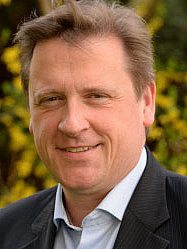
Prof. Dr. rer. pol. Peter Grundke
To the podcast "Bankruptcies, bad luck and crises - what do we learn from historical banking misfortunes?" (german language)
The students are supervised during production. And there are editorial days where the work is discussed together: How do I get the facts across in an exciting way? Is everything right in terms of content? Or how do I manage to speak without making mistakes? An exam is still written, but with reduced content. And in the end, the grade is made up of both performances.
"If things don't go so well in the exam, you can balance out the grade with the other exam performance. This takes some of the pressure off the exam and reduces the feeling that everything depends on it," says Peter Grundke.
But what do the teachers get out of it? "For me, it's the intrinsic motivation: I see that the students are more motivated, that they learn more and have more fun. And that also gives me a lot of pleasure as a lecturer," explains Grundke. "But at the same time, of course, it's also extra work. I was surprised at how much supervision such a podcast requires. And I had to familiarize myself with topics that I had no idea about before: licensing issues, for example, or audio technology. I also have to emphasize the support I received from VirtUOS, which was really helpful."
And your own experiences with exam nerves? "Not exam nerves, but respect for exams. I studied mathematics in Aachen and there were a lot of oral exams. It can instill respect when you're a young student sitting opposite a professor. If you know what's coming, you can get nervous. But the only thing that helps is to just do it and hope that it works out. And then to have the confidence that it will work the next time.
When I ask Lena Szczepanski about exam nerves, she answers directly: "Yes, I know the feeling". She first studied physics and biology to become a secondary school teacher, then did her traineeship in Münster and is now doing her doctorate in biology didactics at the university. "During my traineeship, I was told that women can't do physics. That's tough, of course. I really messed up my first physics lesson and the principal thought about taking the lessons away from me again."
She uses her experience from her traineeship for her teaching at the university: "I know what I myself lacked during my studies and training. That's why I want to train future teachers better and prepare them practically for the exams during their traineeship." This seems to be working well, as she was awarded one of the prizes for good academic teaching for her teaching concept this year. This concept also includes alternative examinations, such as the examination interview.
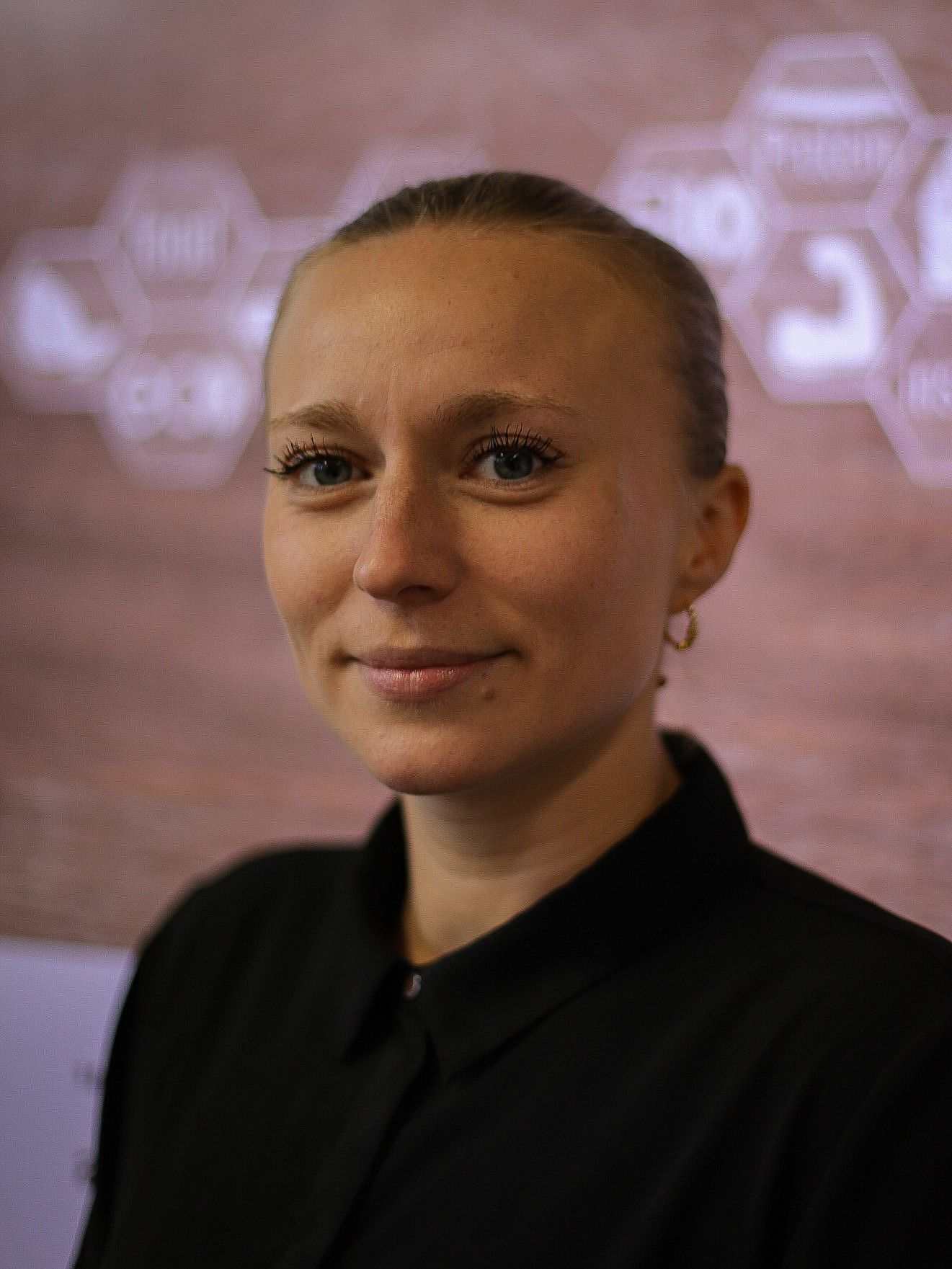
Lena Szczepanski
But how does an exam interview differ from an oral exam? "Above all, the students have more control and support," says Lena Szczepanski. "Students can choose the topic of the examination interview themselves. This gives them a lot of confidence, as they can prepare themselves in a targeted manner and then present themselves as experts. In addition, the students always come to the interview as a team of two, which means they can complement or support each other if things get stuck. It's more about working together than against each other."
The discussion begins with an introductory talk in which the students present the topic in five minutes. This is followed by five minutes for questions and five minutes for discussion, so that an examination in a team of two lasts 30 minutes. "The discussion is an open round of questions," explains Szczepanski. "The students are given teaching material that they have to assess themselves. We then discuss the pros and cons of the approaches together. I can also guide the discussion with questions and thus help a little. And there is no categorical right or wrong. So it's about more than just reproducing subject content and dull memorization."
And how do students react to the exam interview? "The general reaction is usually: "That went by quickly and wasn't so bad!" That makes me happy, of course. And I've also heard from some that it takes the fear out of the traineeship because it's a positive exam experience." Of course, there are also suggestions for improvement: "The students usually want more direct feedback during the exam interview."
The four C's are also at the forefront of the examination discussion: students learn to communicate their topic, to support each other during and before the examination, to creatively demonstrate the transfer of learning in presentations and to critically evaluate the material presented. Learning success guaranteed.
Do you also know the problem and are stressed or overwhelmed by exams?
Then the university has offers to support you:
In the workshop "Successfully dealing with exam anxiety" , you will learn how to deal effectively with exam anxiety: How do I organize the material well? How can I let go of stressful thoughts? How can I regulate my emotions? And how can I remain confident in the exam situation?
The Psychological Counseling Center can also help you with performance pressure and exam anxiety. Six psychologists will take time for you in personal counseling sessions.