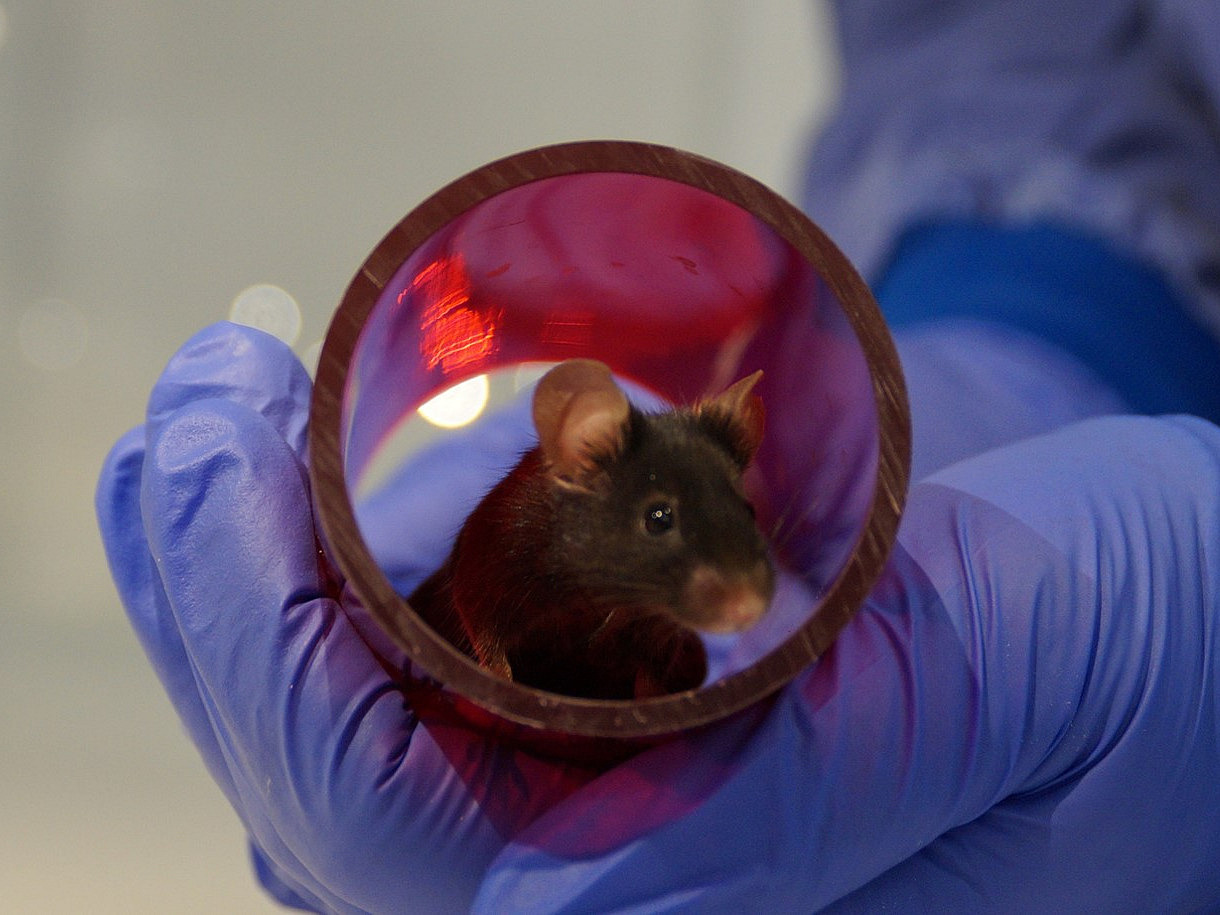
When animals are used in research, they should be subjected to as little stress as possible. However, even routine practices might sometimes cause stress. Therefore, researchers aim to identify as gentle procedures as possible when working with laboratory animals. In a recent study, scientists from the Behavioural Biology division examined a common everyday practice in working with mice: the handling of the animals.
Typically, when mice are to be placed into a fresh cage or a behavioural testing apparatus in the laboratory, the traditional method is "tail handling": gently grasping the animal by the middle of the tail, then placing it on the experimenter's hand or forearm and releasing it at the target location. In recent years, an alternative method has also been used. It involves first guiding the mouse into a plastic tube, then moving it inside the tube to the target location. This method, called "tunnel handling," is claimed to cause less stress in the mice. But does this claim really hold true? A research team led by Dr. Neele Meyer and Prof. Dr. Chadi Touma explored this question in a recent study.
Effects of routine tail and tunnel handling
"In recent years, some studies have compared both handling methods. However, these studies often involved unusually frequent and relatively long handling of the animals, which does not reflect routine laboratory conditions," explains Neele Meyer. "Additionally, they often only examined certain behavioural changes in the animals, while ignoring physiological stress responses. In our study, we aimed to consider both the relevant behavioural and physiological aspects to provide a comprehensive and scientifically sound assessment of both handling methods when applied routinely."
To this end, the researchers kept male and female mice, transporting them differently during weekly cage changes over a period of ten weeks: one half using tail handling, the other half using tunnel handling. They then examined the animals’ exploratory behaviour, anxiety levels, social behaviour and reactions to a human hand in their cages. Additionally, they measured stress hormone concentrations and collected further physiological data to infer possible stress experienced by the animals.
No consistent differences between the experimental groups
What did the researchers find? In fact, there were no clear differences between the two groups concerning the mice’s behaviour or their stress physiology.
„This shows that routine handling of mice by the tail or in the tunnel does not have a consistently different effect on relevant behaviours or physiological stress parameters, and thus both methods are suitable for welfare-friendly handling of mice“, says Chadi Touma. "Through our study, we also demonstrated that it is very important to thoroughly examine new procedures and suggestions aimed at improving animal research methods—and to consider both behavioural and physiological responses comprehensively in the context of animal welfare."
Study as a reference point for future research
The researchers hope that their comprehensive study will serve as a reference point in the future and help to establish quality standards for scientifically sound assessment of animal welfare in laboratory animal science. They also have additional ideas for handling mice. For example, they could investigate contactless carrying of animals using cardboard boxes that are provided and can serve as shelters in the home cages.
Publication: Meyer, N.; Gottschalk, R.; Jakobi, L.; Schönhoff, A.-M. & Touma, C. (2025): Lack of evidence for a consistent differential impact of tail and tunnel handling on markers of welfare in laboratory mice. Scientific Reports 15.