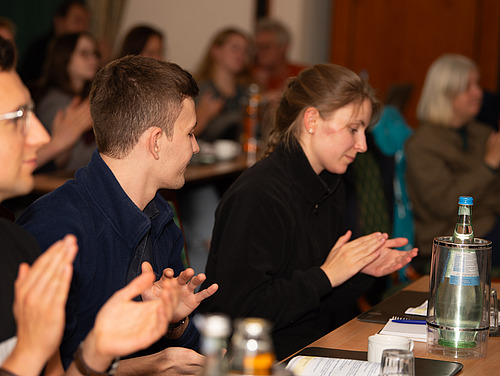
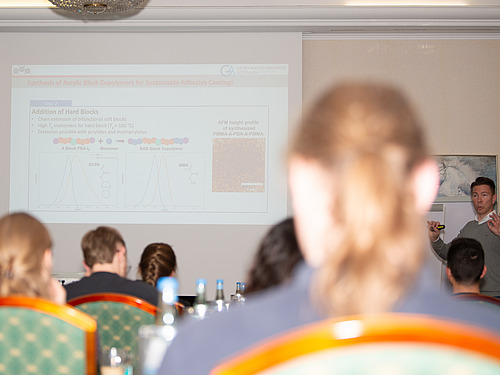
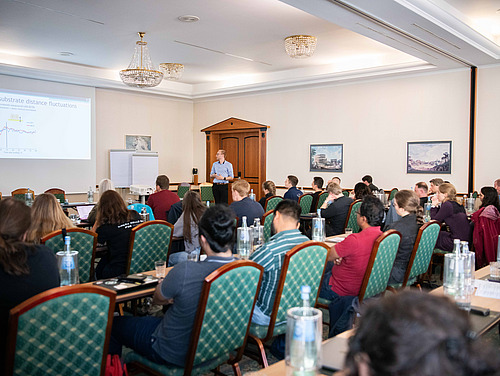
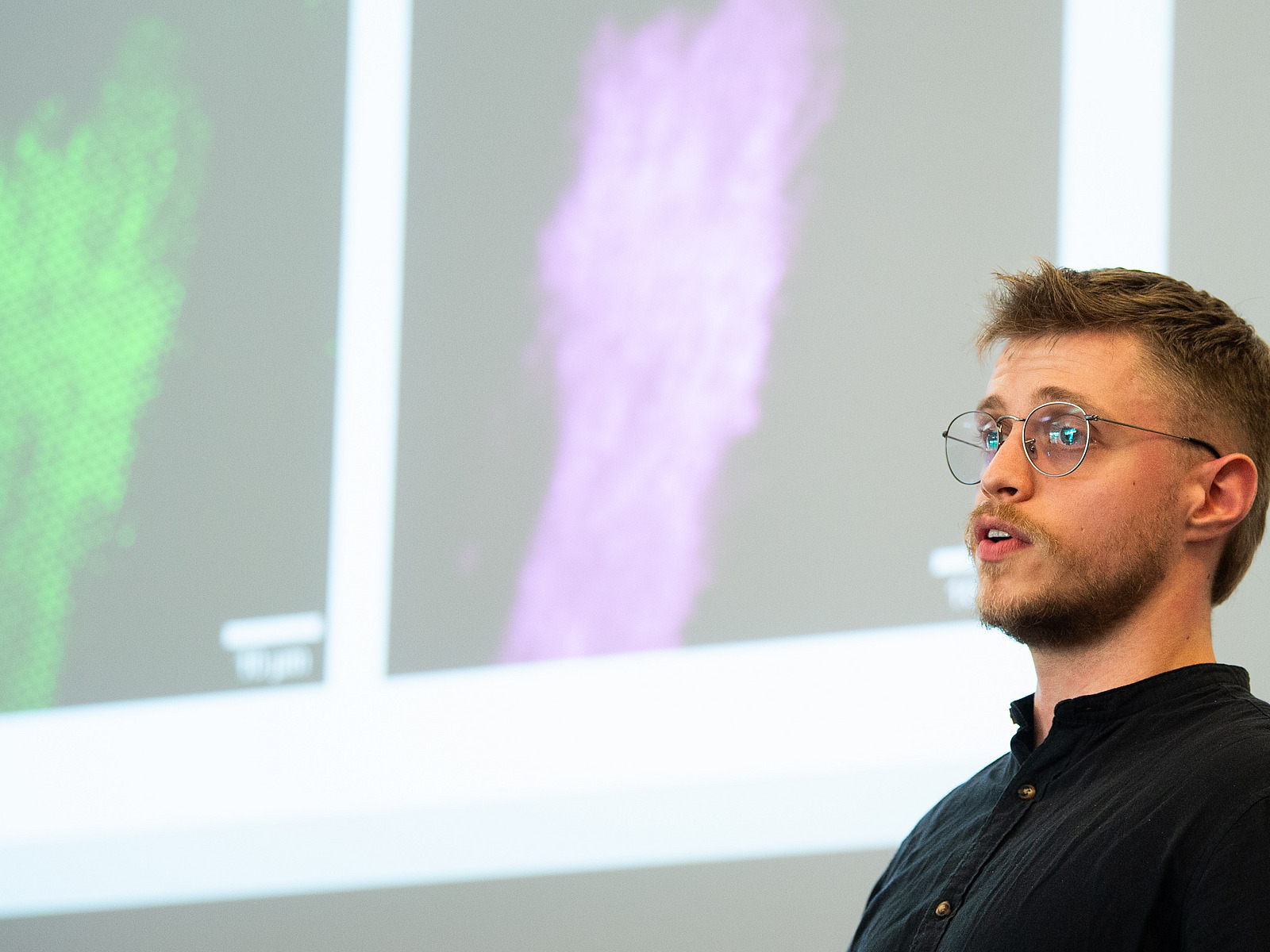
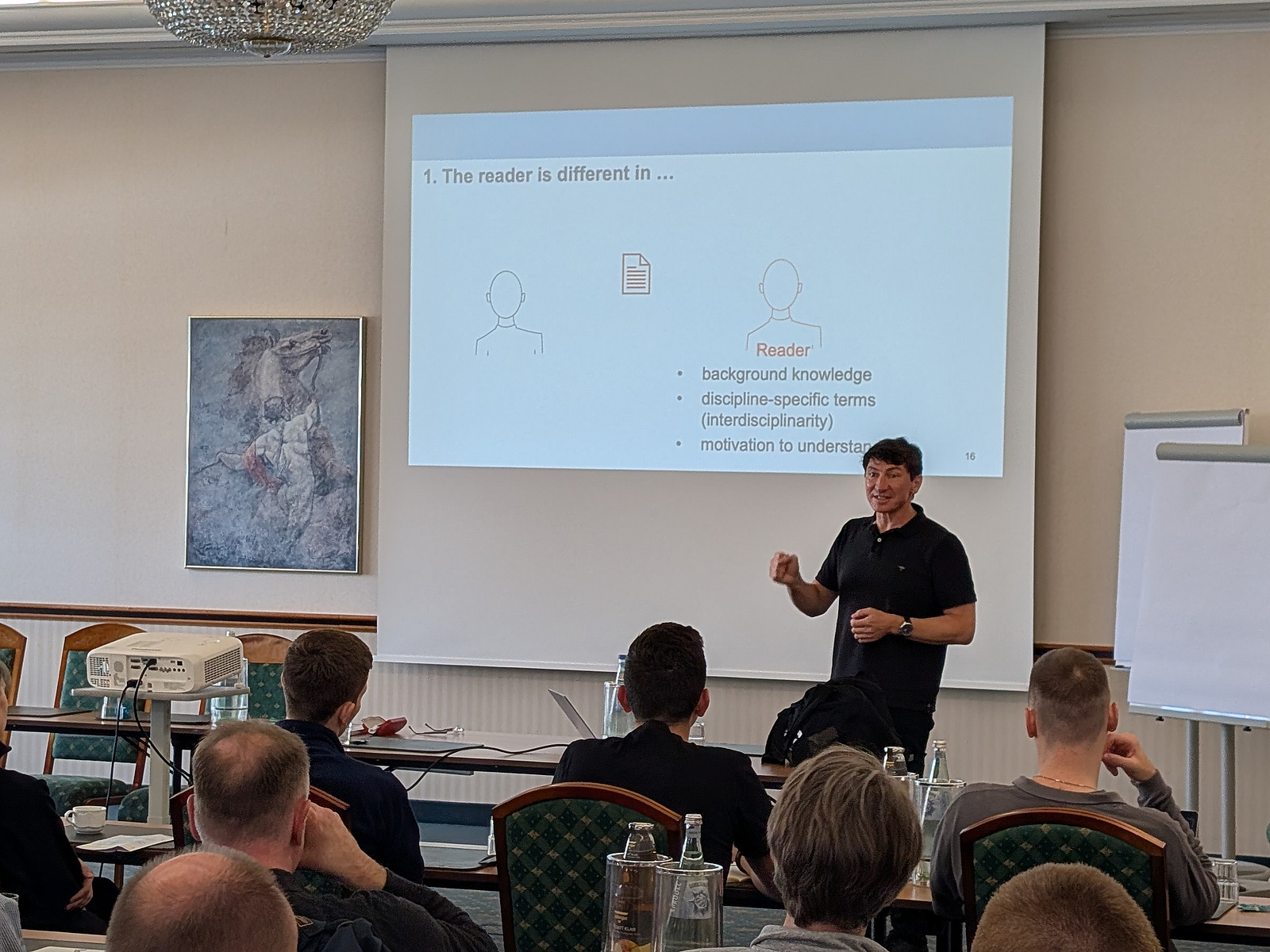
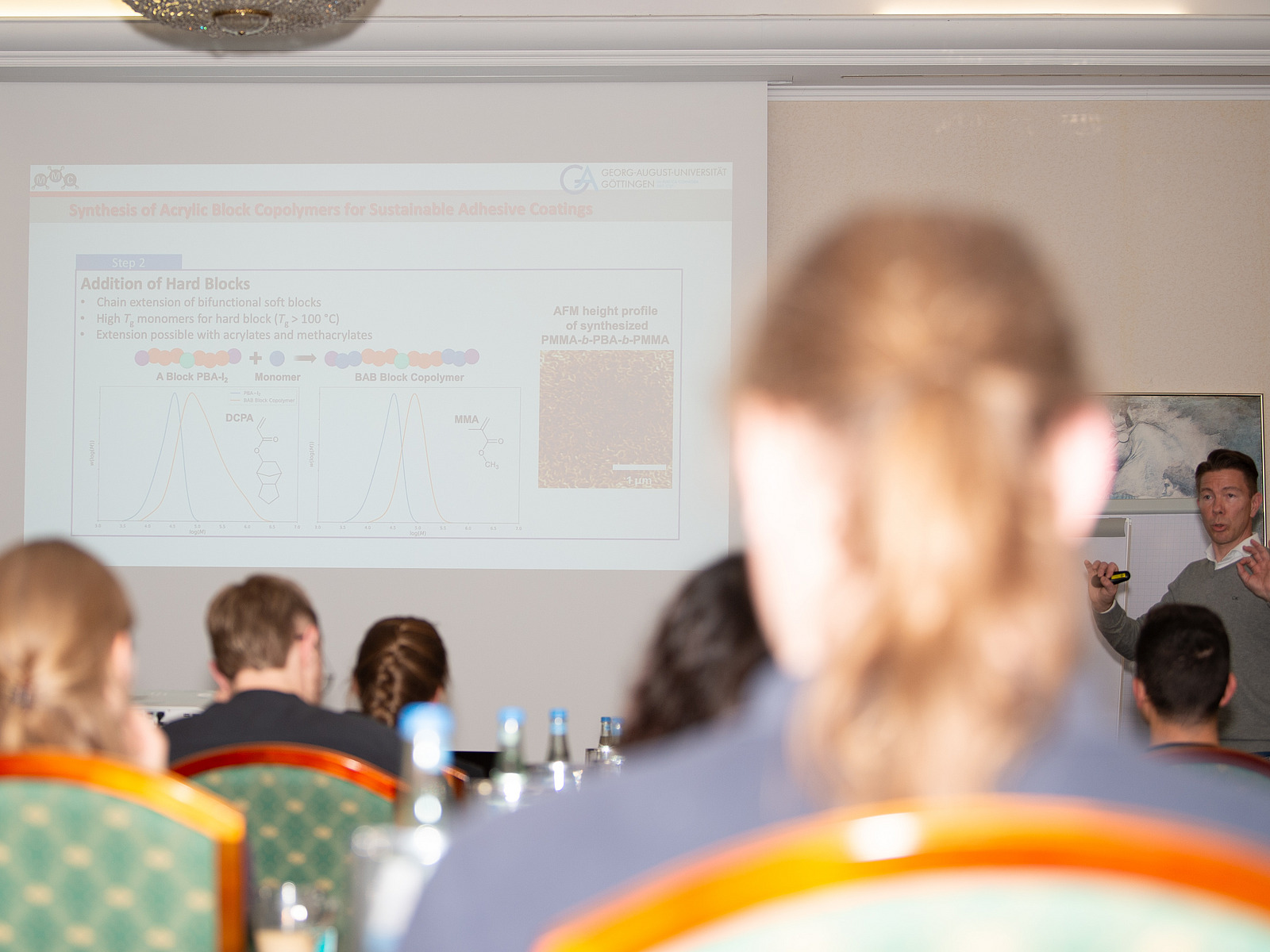
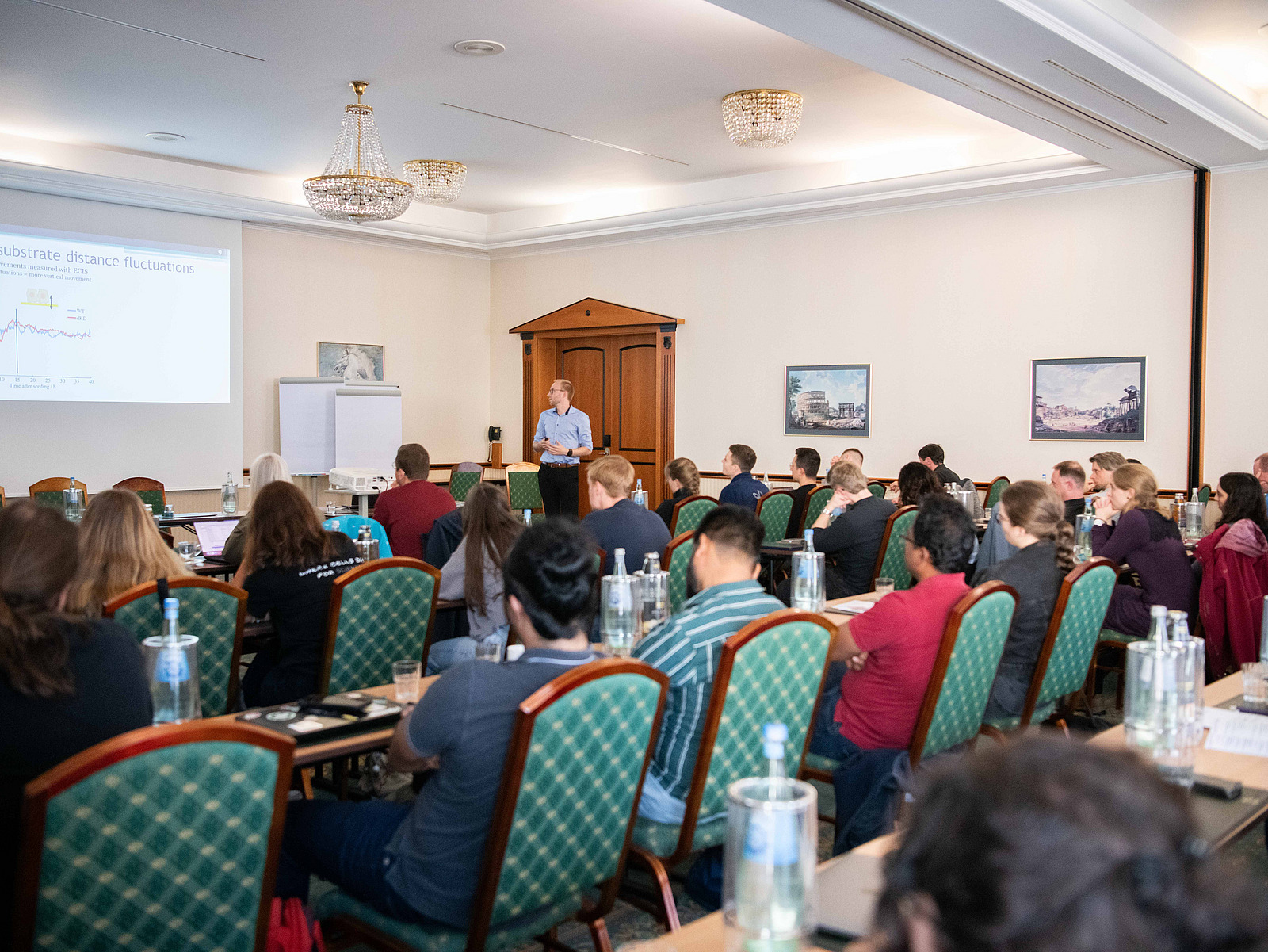
From September 15 to 17, 2025, the doctoral researchers and supervisors of the DFG Research Training Group 2900 “nanomaterials@biomembranes” gathered in Göttingen for their annual retreat. The event brought together scientists from Osnabrück University, the University of Göttingen, and the Max Planck Institute for Multidisciplinary Sciences (MPINAT) to exchange ideas, strengthen collaborations, and foster interdisciplinary dialogue.
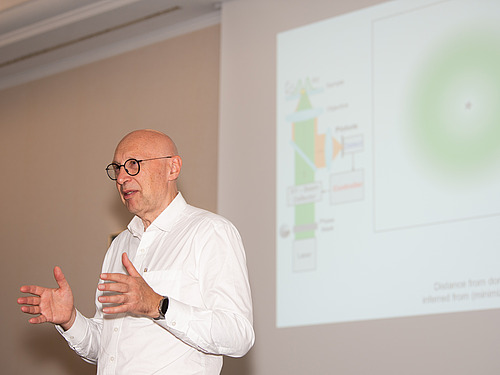
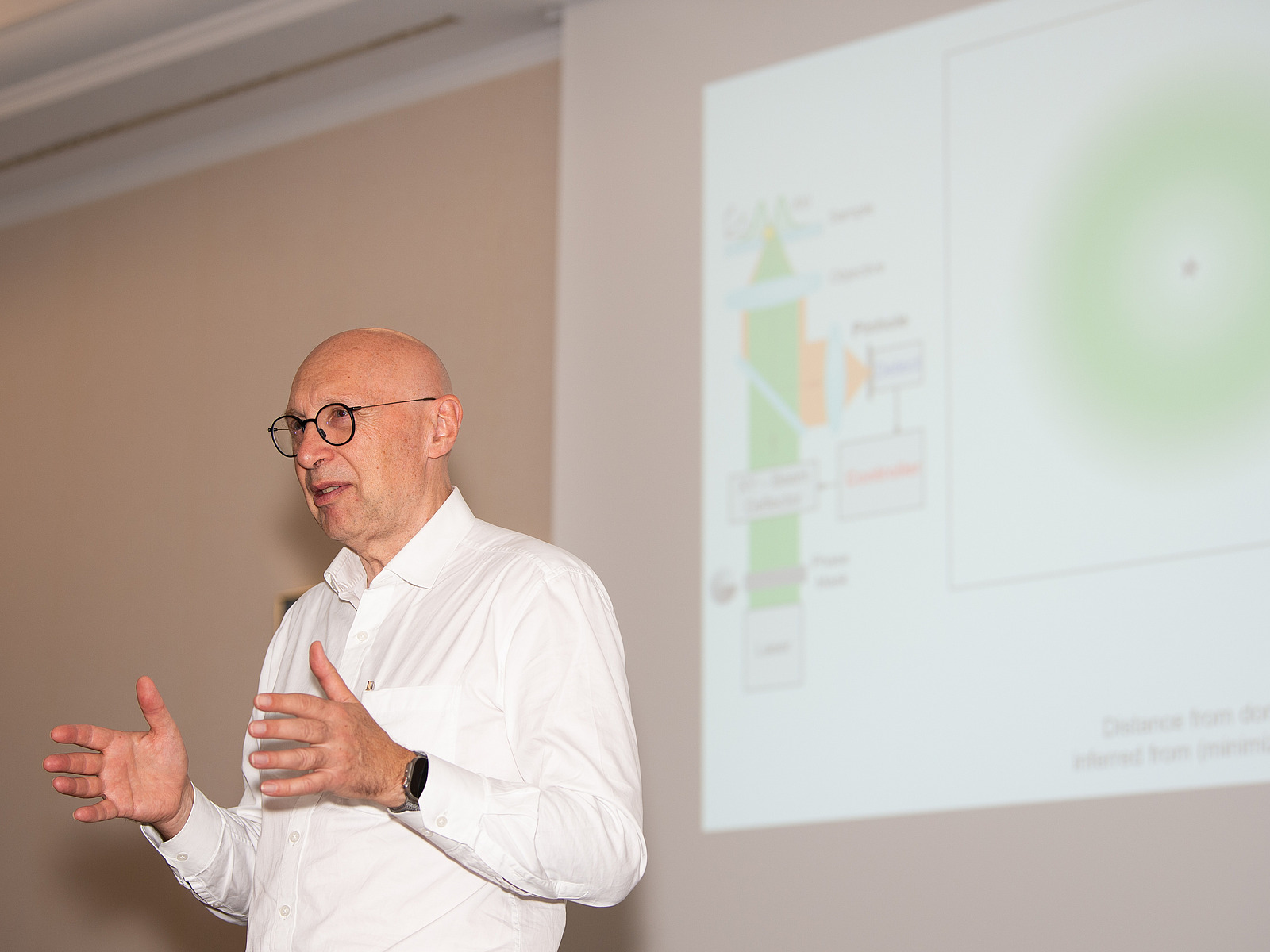
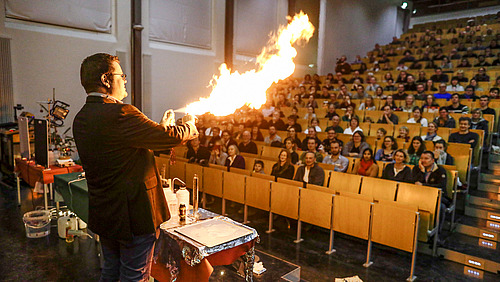
A highlight of the meeting was the keynote lecture by Nobel Laureate Prof. Stefan W. Hell, Director at the MPINAT and pioneer of super-resolution fluorescence microscopy. His talk on the latest advances in nanobiophotonics perfectly reflected the shared scientific ground between the RTG’s research focus and the Göttingen research environment. His participation emphasized both the scientific excellence and growing visibility of Osnabrück’s research in the life and material sciences.
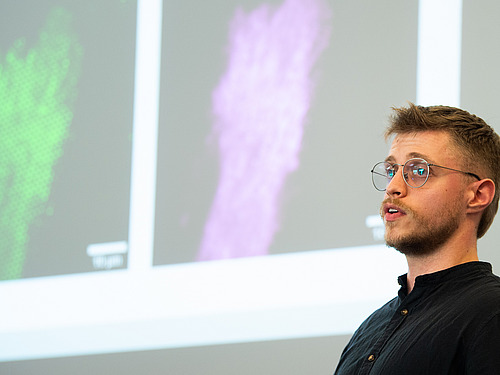
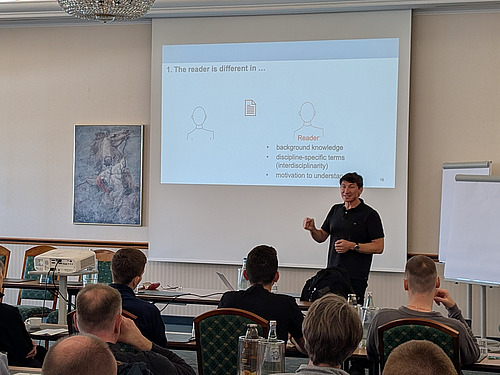
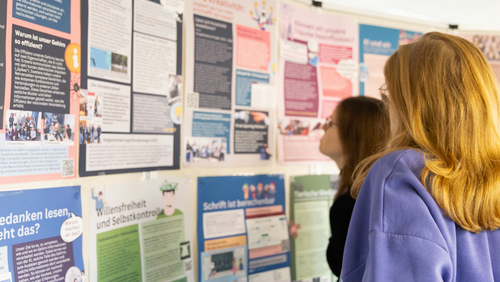
Over three days, participants discussed their current work in oral presentations and poster sessions covering four thematic clusters. Renowned speakers from Göttingen — including Claudia Steinem, Jörg Enderlein, Silvio Rizzoli, Philipp Vana, and Claus Ropers — contributed with stimulating talks that sparked cross-disciplinary discussions. The revisit by associated Mercator Fellow Prof. Stefan Howorka from University College London was particularly valuable for the young scientists. Together, they developed new findings in thematic workshops focusing on the issue of good science communication.
The retreat also featured a visit to the Max Planck Institute for Multidisciplinary Sciences, where participants toured the laboratories of the NanoBiophotonics (Hell Group) and NMR-based Structural Biology (Griesinger Group) departments.
The event not only provided valuable feedback and networking opportunities for young researchers, but also served as a strong representation of Osnabrück University’s scientific presence within one of Germany’s leading hubs of molecular and biophysical research. With inspiring discussions and new impulses for collaboration, the RTG Retreat 2025 successfully strengthened the bridge between Osnabrück and Göttingen — and highlighted the innovative spirit of Osnabrück’s research community.