Bioanalytical Chemistry
The Bioanalytical Chemistry division, led by Prof. Dr. Florian Fröhlich, investigates how cells regulate fat metabolism. Using baker's yeast as a model organism, the aim is to establish the molecular basis for understanding how disturbances in fat metabolism can cause disease.
Molecular mechanisms of fat metabolism
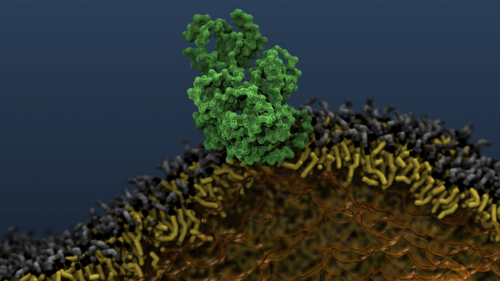
The membranes of all eukaryotes are formed from lipids belonging to three main classes: glycerophospholipids, sterols and sphingolipids. All membranes of the various organelles have a specific lipid signature. Maintaining these lipid signatures is crucial for the function of the organelles and thus also of the cells. In addition, cells have the ability to adapt their membranes to different external conditions. If this ability is impaired, it is often associated with the development of various diseases, such as neurodegenerative disorders.
The Bioanalytical Chemistry division investigates the fundamental processes of lipid metabolism regulation in the model organism Saccharomyces cerevisiae, baker's yeast. All fundamental lipid metabolic pathways found in mammals are conserved and can be studied in yeast. The primary questions addressed are:
- Which enzymes are responsible for the production of the various lipids?
- What are the molecular mechanisms that these enzymes use to produce lipids?
- And how can these processes be regulated to adapt to changes in the environment?
Analytical methods for the investigation of fat metabolism
To investigate the above questions, the Bioanalytical Chemistry division uses a versatile combination of various methods. On the one hand, the various, mostly membrane-bound enzymes of lipid metabolism are purified from yeast and examined in a membrane system produced in-house. A long-term goal here is to reconstruct complete lipid biosynthesis pathways outside the cell in order to study their regulation. The results obtained in vitro are then to be confirmed in the cell model.
In addition to traditional biochemical, cell biological and genetic methods, the Bioanalytical Chemistry division also uses mass spectrometric analysis of proteins and lipids (proteomics and lipidomics). This allows the exact protein and lipid composition of cells to be analysed in detail under different conditions.