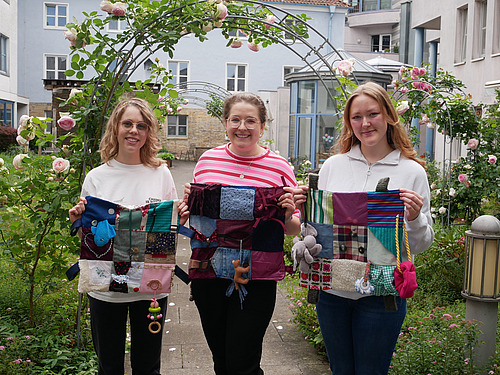
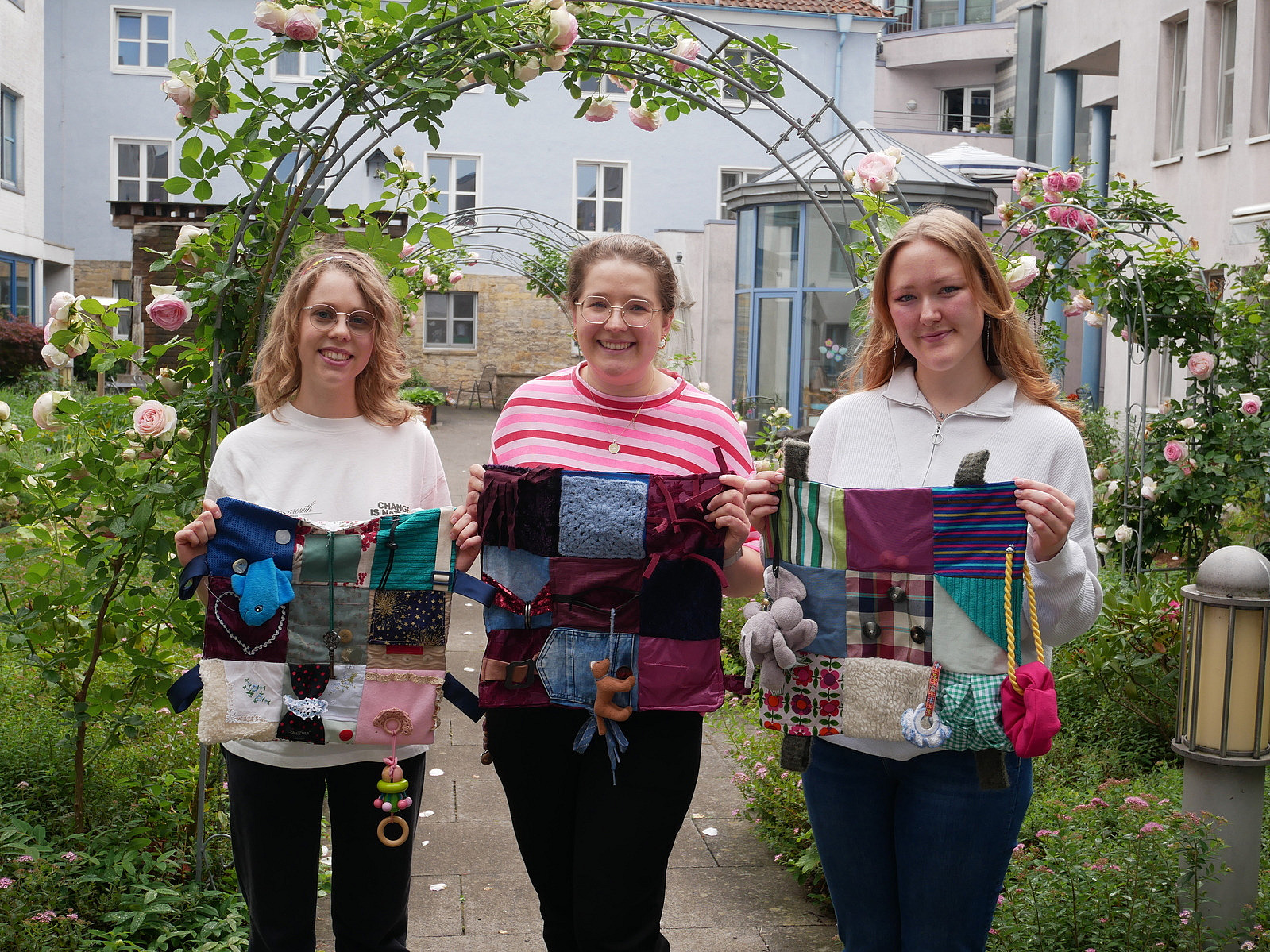
MÖWE gGmbH (MÖWE) is a social institution in Osnabrück whose aim is to support people in difficult circumstances. The development and production of the dementia blankets was part of a seminar led by Mareike Alexander, lecturer in textile design at Osnabrück University. The seminar focused on the creation and development of textile structures and objects in connection with dementia. A "textile space" is to be created in cooperation with MÖWE and the sewing meeting place there. In addition to textile handicrafts, sewing and experimenting with textile topics, the sewing meeting is intended to create a place for dialog, listening, storytelling, learning from each other and respectful interaction. Half of the seminar took place in the Textile Design rooms and half in the MÖWE rooms.
Students Maya Bokern and Elina Klink presented the dementia blankets to the two dementia wards at Paulusheim and were given a tour of the nursing home by nursing manager Merle Kaufmann. The residents, the head of nursing and the nurses were delighted with the donation. "We are really pleased that young people are helping our residents," said Merle Kaufmann. "The blankets were very well received." It was a valuable experience for the students to put their own project into practice in a specific social environment.
A side effect of dementia is often motor restlessness. Dementia blankets, also known as nesting blankets, made from different materials offer the opportunity to explore different surfaces with the hands. Playing with the blankets offers different stimuli, can awaken memories and has a calming effect.
Further information for the media:
Mareike Alexander, Osnabrück University
Textile Design
mareike.alexander@uni-osnabrueck.de