News Detail Page

Exciting talks and an open-air poster session: Second international symposium of Collaborative Research Centre 1557

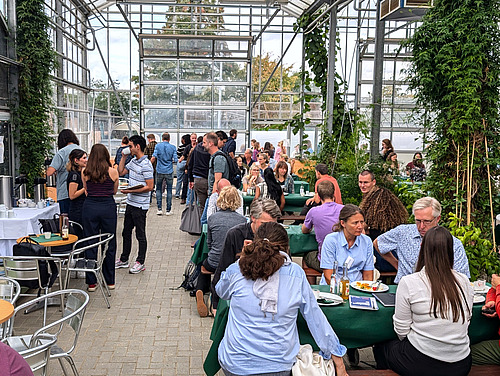
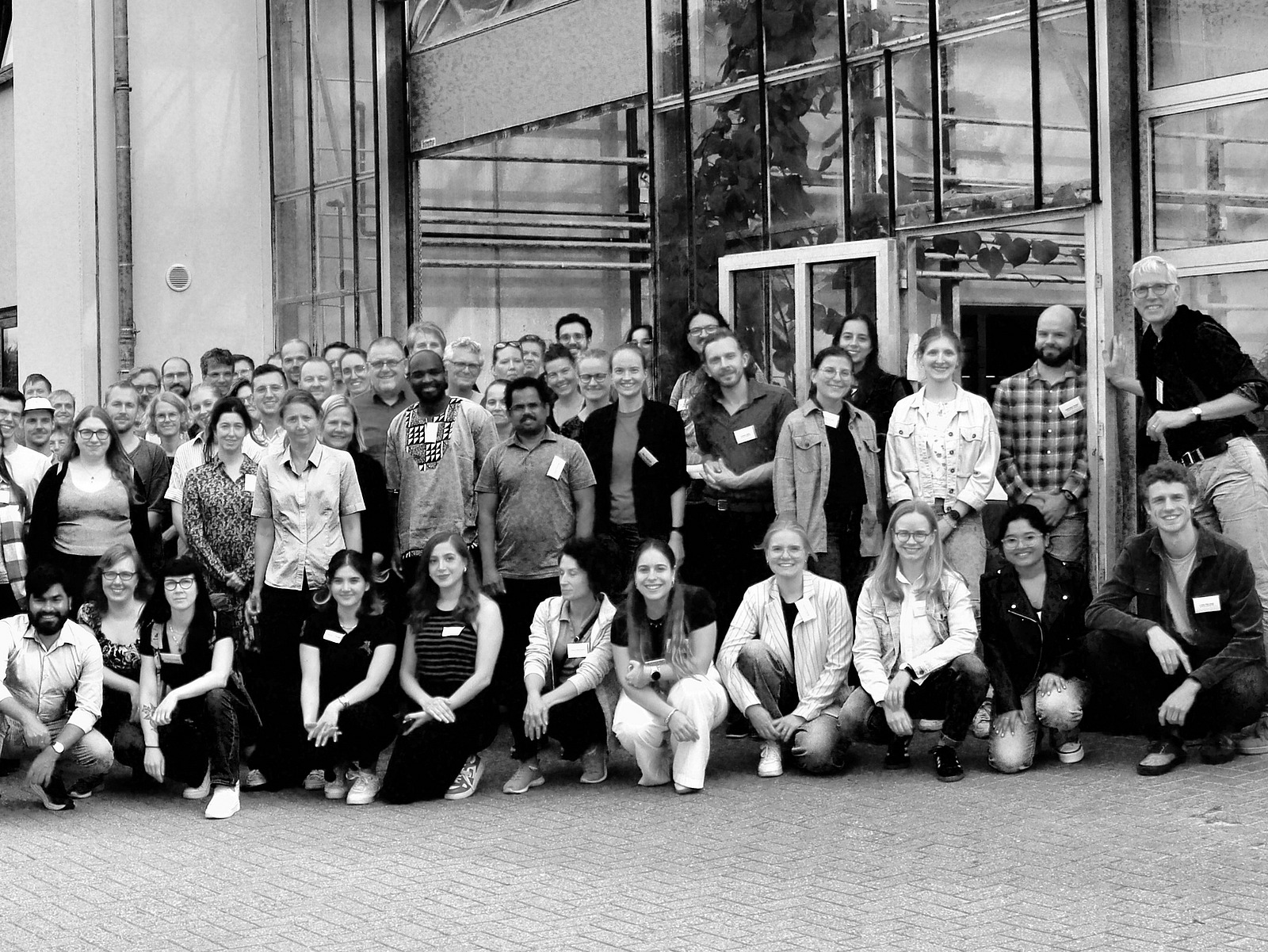
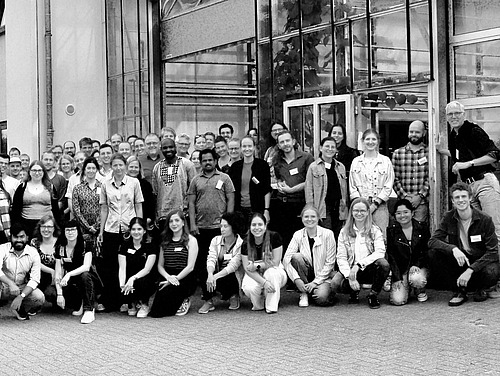
Under the title „Plasticity of Cellular Membrane Networks“, the second symposium of the CRC 1557 took place in Osnabrück from September 3 to 5. Around 150 participants gathered at the Bohnenkamp House in the Botanical Garden for scientific exchange.

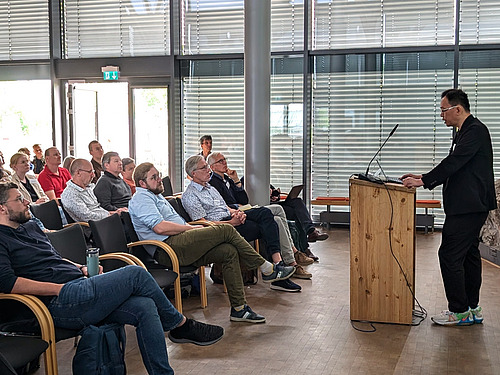
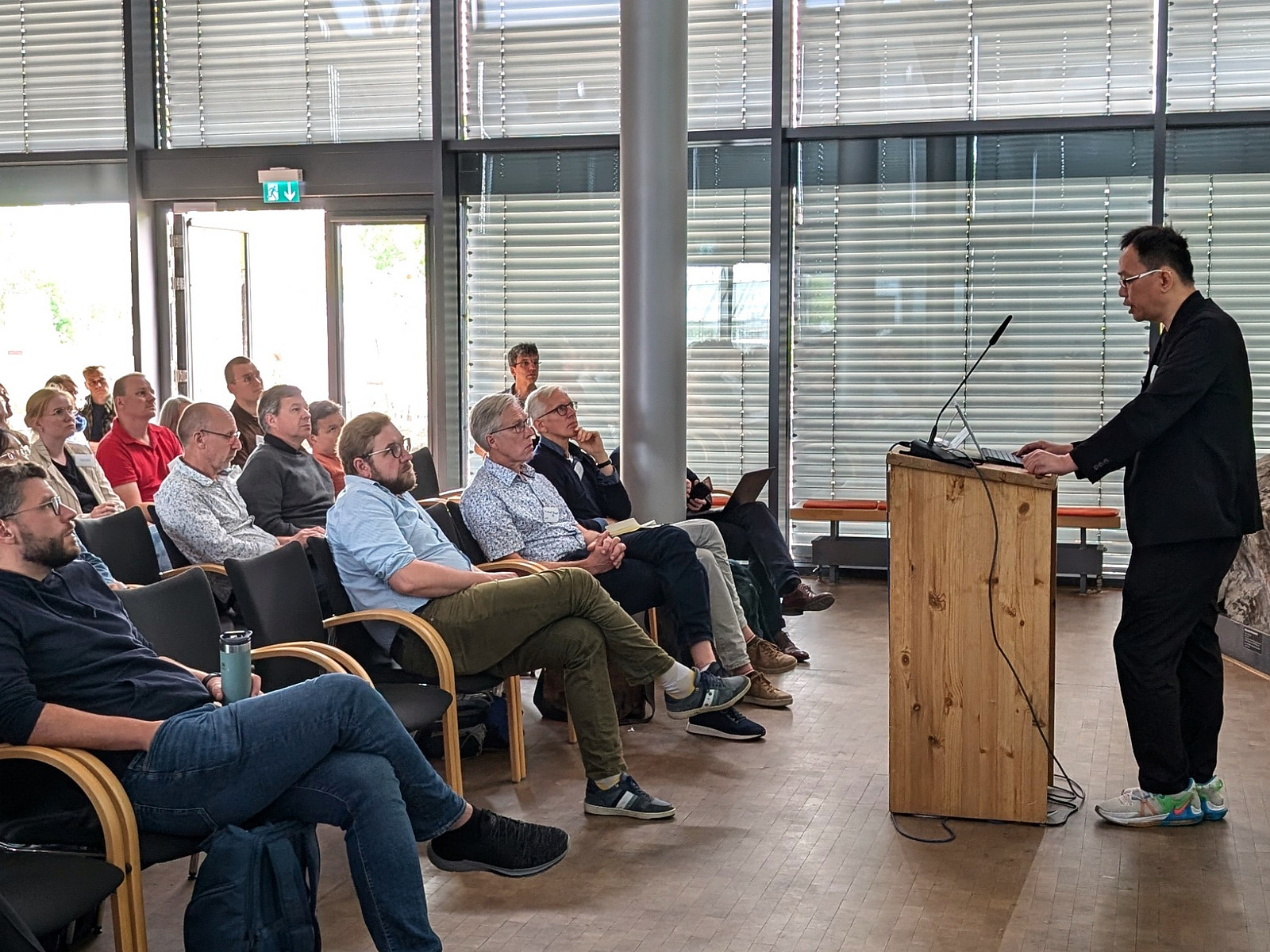
The symposium began on Wednesday evening with a keynote speech by Tobias Walther, who conducts research at the Memorial Sloan Kettering Cancer Centre in New York (USA). He reported on his work on the biogenesis of lipid droplets in the endoplasmic reticulum. On Thursday and Friday, 19 further presentations were given by speakers from Germany and abroad.

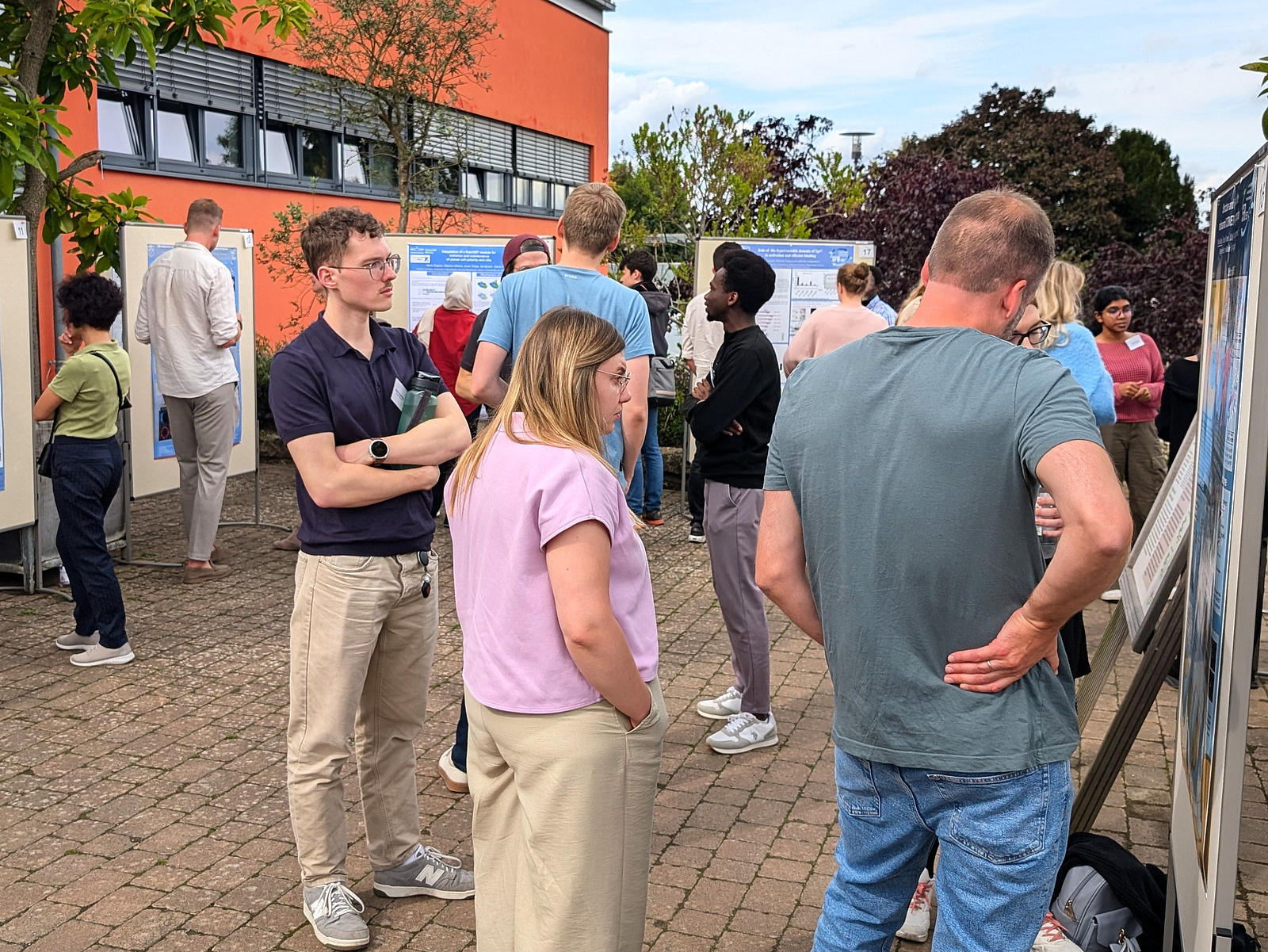
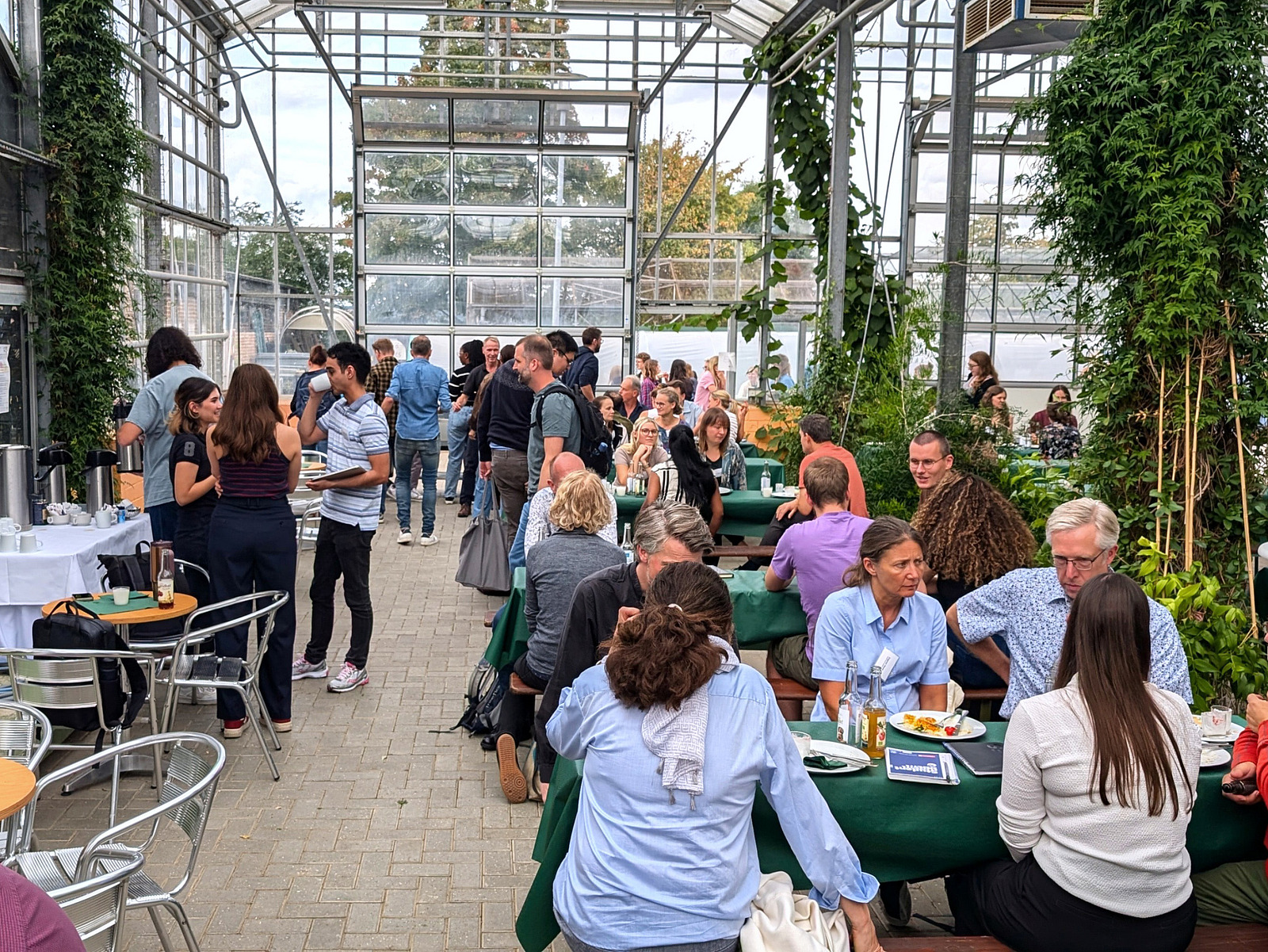
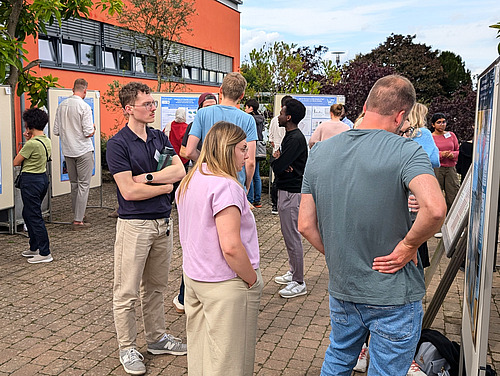
In addition, during the symposium, numerous doctoral students associated with the Integrated Research Training Group (IRTG) of the Collaborative Research Centre were able to present their research to an international audience on posters – and in a very special setting at that. Given the pleasant temperatures, it was decided at short notice to move the poster session to the outdoor area of the Botanical Garden.

Christian Ungermann and Florian Fröhlich, the symposium organisers, are pleased with how it went: „We are delighted with the success of the symposium and the excellent contributions from the numerous scientists, who not only gave impressive presentations but also engaged in lively discussions with participants during poster sessions and breaks. The symposium has once again demonstrated that Osnabrück is internationally renowned in the field of membrane biology.“

An overview of all guest speakers

  • Tobias Walther, New York
  • Claudine Kraft, Freiburg
  • Vassiliki Nikoletopoulou, Lausanne
  • Qing Zhong, Shanghai
  • Dagmar Heuer, Berlin
  • Felix Randow, Cambridge
  • Natalie Krahmer, Munich
  • Bianca Schrul, Homburg
  • Volker Haucke, Berlin
  • Carla Schmidt, Mainz
  • Bettina Böttcher, Würzburg
  • Rachid Thiam, Paris
  • Guillaume Drin, Nice
  • Ute Hellmich, Jena
  • Christine Ziegler, Regensburg
  • Milena Schumacher, Lausanne
  • Francesca Giordano, Paris
  • Giovanni D´Angelo, Lausanne
  • Pedro Carvalho, Oxford
  • Hannes Maib, Sheffield

About the Collaborative Research Center 1557

The Collaborative Research Centre 1557 addresses the question of how membranes and their lipid code control the plasticity of membrane proteins – and how, in turn, membrane properties are maintained and adapted in response to the environment.
Related news

Pupils stand crowded together, with posters and information material bearing the Osnabrück University logo visible in the background.
© Niklas Kästner | Osnabrück University

Insights into the science of life: The 2025 University Information Day at the Biology department

Once again this year, the Biology department offered interested pupils exciting insights on the University Information Day with presentations, hands-on stands, taster lectures and guided tours of the Center for Cellular Nanoanalytics (CellNanOs).

A brown owl flies against a grey-blue sky.
© Matthias Berger

Short-eared owls and flocks of goldcrests: birdwatching excursion to Heligoland organised by the Zoology division

In October, the Zoology division held its annual excursion to Heligoland. The group discovered more than a hundred different species this year. Two short-eared owls and huge flocks of goldcrests caused particular excitement.

View from the back of a lecture hall with students; two men can be seen behind a desk at the bottom.
© Laura Elpers | Universität Osnabrück

Start of the 2025/26 winter semester: Osnabrück Biology welcomes its new students

The start of the 2025/26 winter semester marked the beginning of biology studies at Osnabrück University for many students. We are delighted to have welcomed around 280 new Bachelor's and Master's students this year.

A man and a woman talking at a trade fair stand
© Mirco Imlau

CellNanOs virtual research building at the BMFTR in Berlin

At the open day of the Federal Ministry of Research, Technology and Space (BMFTR), CellNanOs presented newly developed physical microscopy methods using nanomaterials for cell biology.