A major award

Biochemist from Osnabrück University admitted to Leopoldina

It is a great honor: Prof. Dr. Christian Ungermann, biochemist at Osnabrück University, was officially admitted to the Leopoldina, the German National Academy of Sciences, in Halle (Saale) on April 9.

The President of the long-established institution, Prof. Dr. Bettina Rockenbach, presented him with his membership certificate at a ceremony.

Prof. Ungermann is the first scientist from Osnabrück University to be admitted to the Leopoldina. Among other things, the biochemist researches how our cells break down and recycle superfluous or damaged cell components. His research focuses on lysosomes, which act as a cellular stomach and contain the necessary digestive enzymes. In addition, his group is investigating the process of autophagy, through which the cell components enter the lysosomes. The degradation products are not disposed of but used as new building blocks by cells. Defects in lysosomes or autophagy are the basis of numerous diseases. Autophagy also occurs during intermittent fasting and sport and promotes renewal processes in the body. Prof. Ungermann's studies "contribute significantly to the understanding of the complex dynamics of protein complexes involved in the functionality of lysosomes and autophagosomes and expand the knowledge of how cells maintain homeostasis under stress conditions", according to the
justification for admission to the Leopoldina. The functionality of lysosomes is not only fundamental for the survival and function of cells, but also plays an important role in the ageing process, as well as in various diseases such as cancer, neurodegenerative disorders and infections. "I am delighted to receive this special award and consider it a great honor to be a member of the Leopoldina," says the 57-year-old, who has been researching and teaching at Osnabrück University since 2005.

Founded in 1652, the German Academy of Sciences Leopoldina has around 1,700 members from numerous scientific disciplines, including around 120 Nobel Prize winners. In 2008, it was appointed Germany's National Academy of Sciences. Its tasks include representing German science abroad and advising politicians and the public.

Further information for the media:
Prof. Dr. Christian Ungermann, University of Osnabrück
School of Biology/Chemistry
cu@uos.de

Related news

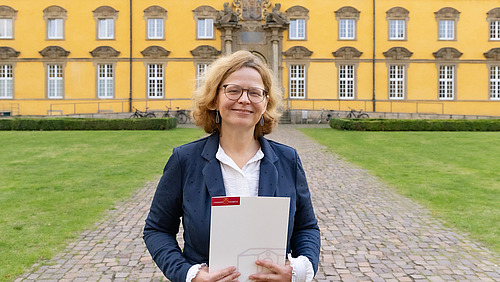
Portrait of a middle-aged woman in a blouse and blazer in front of a large building with many windows
© Jens Raddatz

Prof. Dr. Elke Dubbels receives award for habilitation thesis

Prof. Dubbels receives the first prize of the Geschwister Boehringer Ingelheim Foundation for the Humanities for her habilitation thesis on the literary prehistory of the debate on unreliable information and battles over public opinion.

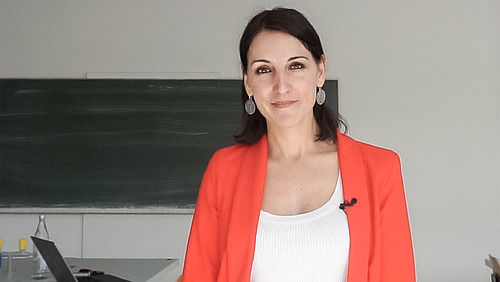
A middle-aged woman in a shirt and jacket stands in front of a slate and smiles at the camera
© privat

The secret recipe for tissue healing

How can tissue regrow without scarring? How can stem cell research be put into practice? We talked to Prof. Dr. Kerstin Bartscherer about this in our "UOS asks questions" series.

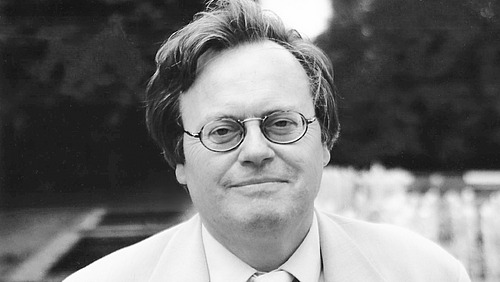
A man looks into the camera.
© Oliver Schmidt

The University mourns the loss of Prof. Dr. Klaus Busch

The University mourns the loss of Prof. Dr. Klaus Busch, who passed away on April 7. The political scientist worked at the former schools of social sciences from 1974 until his retirement. He also served as Vice President from 1999 to 2004.

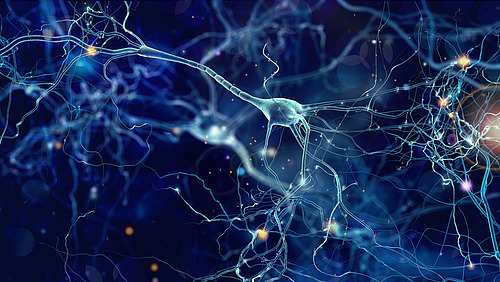
neuron, brain, neurology, nerve, network, neural, biology, impulse, synapse, hormone, organism, connecting, cell, axon, system, thinking, science, energy, alzheimer, signal, medicine, neuronet, glow, microbiology, bio, macro, research, human, 3d, anatomy, biological, brainstorm, cells, connection, glowing, head, hormon, medical, mental, micro, microscopic, mind, nervous, nucleus, space, receptor, render, thought, AI, artificial
© whitehoune|adobe.stock

Tracking down the causes of Alzheimer's disease

A team led by neurobiologist Prof. Dr. Roland Brandt is investigating how harmful tau oligomers are formed - and how their formation can be specifically stopped in order to develop new therapies against Alzheimer's and related diseases.