111/2025
Osnabrück and Princeton

Initiative investigates the possibilities of AI-supported research

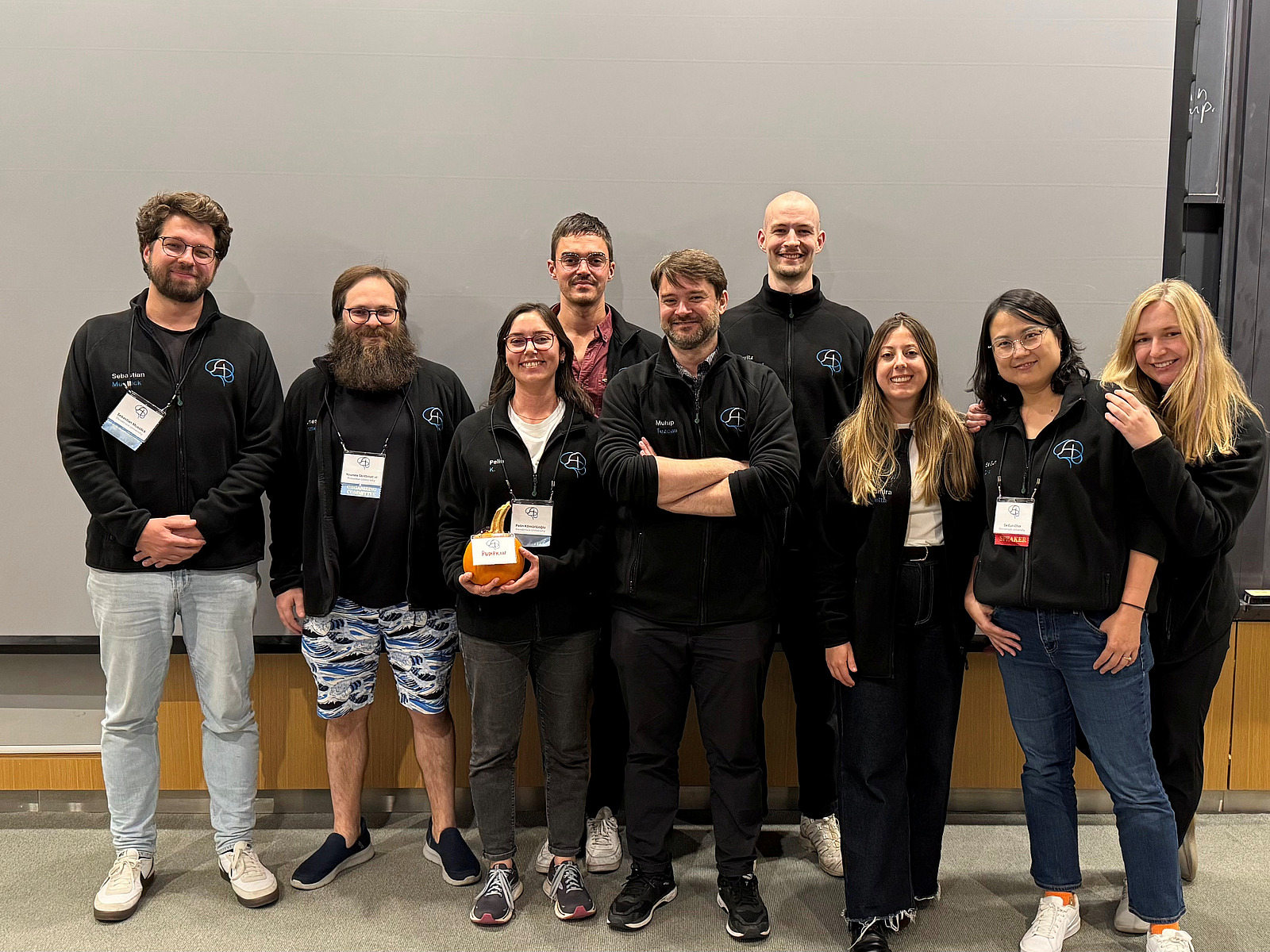
AI and automation are changing the way science is conducted. To explore this development, Prof. Dr. Sebastian Musslick from the Institute of Cognitive Science initiated a workshop with Princeton University.

The theme of the meeting, which took place from September 23 to October 3 at Princeton University, was "Automated Scientific Discovery of Mind and Brain".

The two-week workshop brought together researchers and students from the fields of psychology, neuroscience, cognitive science and artificial intelligence to discuss and experience how new AI technologies can accelerate and automate key aspects of scientific discovery, such as experimental design, data collection and modeling.

"We are witnessing a transformation where AI is not only assisting scientists, but increasingly participating in the discovery process itself," said Prof. Musslick. "Our aim was to examine the impact of this development on the study of mind and brain and to lay the foundations for future collaborations in this exciting new field."

The workshop was supported by the Ministry of Science and Culture of Lower Saxony and the Department of Psychology at Princeton University and fostered an international community of researchers at different career stages. The event also initiated several new joint research projects and laid the groundwork for future grant applications and doctoral exchanges between the two universities.

The results of the meeting are in line with Osnabrück University's new Research Center for Data Science, where "AI for Science" is a central focus. "Through collaborations like this, we are positioning Osnabrück as a hub for automated scientific discovery and AI for science in Europe," explained Musslick. Due to the great success of this first event, the series is to be continued with a workshop at Osnabrück University.

Further information for editorial offices:
Prof. Dr. Sebastian Musslick, Osnabrück University
Institute of Cognitive Science
 sebastian.musslick@uos.de
Related news

Young woman sits on a chair in her room, in the background are a desk and a shelf, in the foreground is a sofa.
© contrastwerkstatt - stock.adobe.com

Rooms wanted!

The International Office is looking for rooms to sublet to international students attending the Summer Schools in July 2026. 370 € per person accommodated.

In einem modern eingerichteten Klassenzimmer sitzen kleine Schülerinnen an ihren Tischen. Die meisten Kinder haben die Hand gehoben, um an der Unterrichtsstunde teilzunehmen. Im Hintergrund steht die Lehrerin, die auf eine der Schülerinnen zeigt. Die Wand hinter ihr ist mit Lernmaterialien, Postern und Notizen dekoriert. Die Atmosphäre wirkt lebendig und engagiert, die Kinder sind aufmerksam und motiviert.
© Louis-Paul Photo - adobe.stock

New school subject "Christian religious education"

Osnabrück University is scientifically supporting the introduction of the new school subject "Christian Religious Education" in Lower Saxony and is investigating its potential for future-oriented, ecumenical education.

Three women work together in a laboratory. One is sitting on a chair, another is explaining a computer graphic.
© Jens Raddatz

Research on brooding processes: When thoughts circle in a continuous loop

What is going on in the mind when negative thoughts circle and thinking seems to be stuck in a spiral? Prof. Dr. Lilian Weber from Osnabrück University is investigating this question.

neuron, brain, neurology, nerve, network, neural, biology, impulse, synapse, hormone, organism, connecting, cell, axon, system, thinking, science, energy, alzheimer, signal, medicine, neuronet, glow, microbiology, bio, macro, research, human, 3d, anatomy, biological, brainstorm, cells, connection, glowing, head, hormon, medical, mental, micro, microscopic, mind, nervous, nucleus, space, receptor, render, thought, AI, artificial
© whitehoune|adobe.stock

Tracking down the causes of Alzheimer's disease

A team led by neurobiologist Prof. Dr. Roland Brandt is investigating how harmful tau oligomers are formed - and how their formation can be specifically stopped in order to develop new therapies against Alzheimer's and related diseases.