The project is funded by the Lower Saxony Ministry of Food, Agriculture and Consumer Protection.
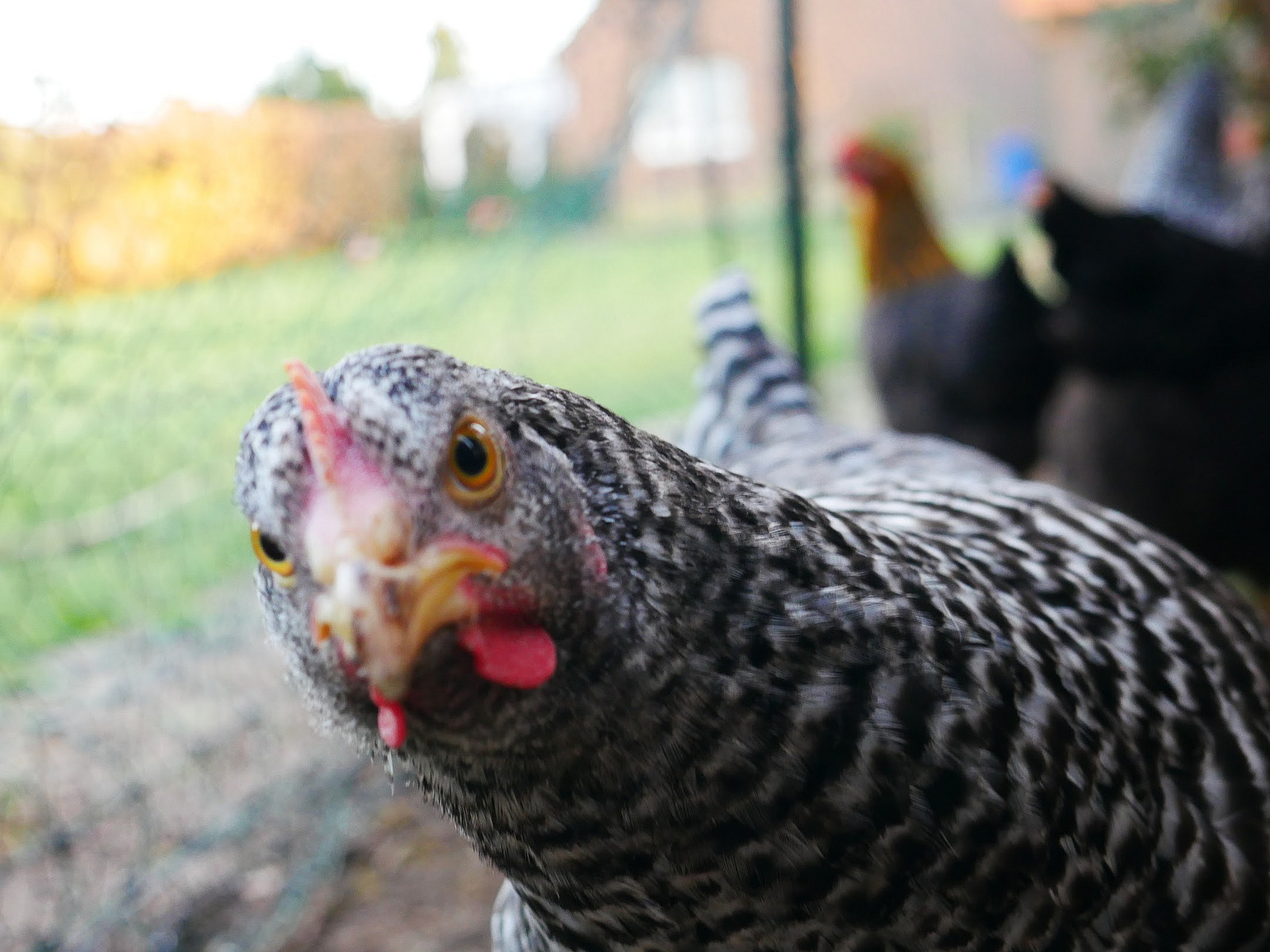
Background: In multi-storey aviaries, laying hens can move freely on different levels. They are provided with food and water, group nests and perches for resting at night. "This type of housing is beneficial for animal welfare, but makes it challenging to turn out the animals," says Osnabrück project manager Prof. Dr. Chadi Touma. The animals are usually turned out at night, when they have retired to sleep and are calmer during catching due to the darkness.
To catch them in the aviary system, the old hens are usually grabbed by the legs, lifted upside down and then loaded into transport containers. This work is carried out by specially trained, expert personnel who are commissioned by the livestock owner. However, there is still a risk of the animals being injured when they are caught or loaded using this method. The researchers assume that turning from the upright to the head-first position is probably associated with stress and possibly pain for the animals. However, a scientific assessment of the stress reaction triggered by this capture method is still pending.
The aim of the project is to demonstrate and evaluate how laying hens can be housed and loaded in an animal welfare-friendly manner. The researchers want to use the results and practical experience gained in the project to derive further suggestions for improving the catching and loading process.
The project is divided into two sub-projects, which will be worked on within 18 months. "In the first, we are investigating on practical farms what influences upright catching with gripping around the body, or"In the first project, we are investigating the effects of upright catching by grasping the body, or in areas of the aviary that are difficult to access, grasping by both stands while holding the breastbone, on animal welfare, loading time, the workload of the catching staff and the economy," says Dr. Birgit Spindler from the Institute of Animal Hygiene, Animal Welfare and Farm Animal Ethology at the University of Veterinary Medicine Hannover, who is responsible for this part of the project.
In order to be able to measure the stress response of the animals to being caught, the researchers are comparing both catching methods (upright vs. overhead) in old hens in the second sub-project. To do this, they are measuring degradation products of the stress hormone corticosterone in the animals' faeces under the direction of Prof. Dr. Chadi Touma, Osnabrück University. Corticosterone is one of the most important stress hormones in rodents and birds, analogous to cortisol in humans, explains Professor Touma. He says: "Overall, we hope that our project will contribute to the objectification of animal welfare assessment and promote the development and application of animal-friendly methods."
Further information for editorial offices:
Prof. Dr. Chadi Touma, Osnabrück University
School of Biology/Chemistry
chadi.touma@uos.de
Dr. med. vet. Birgit Spindler, University of Veterinary Medicine Hannover Foundation
Institute for Animal Hygiene, Animal Welfare and Farm Animal Ethology
Birgit.Spindler@tiho-hannover.de