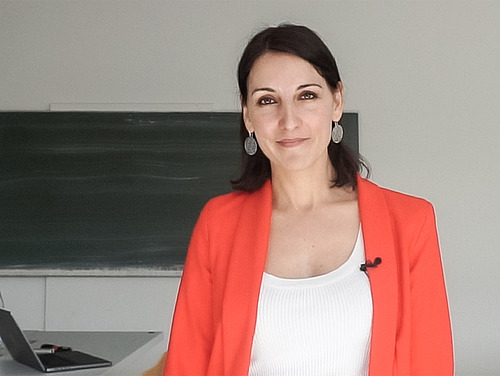
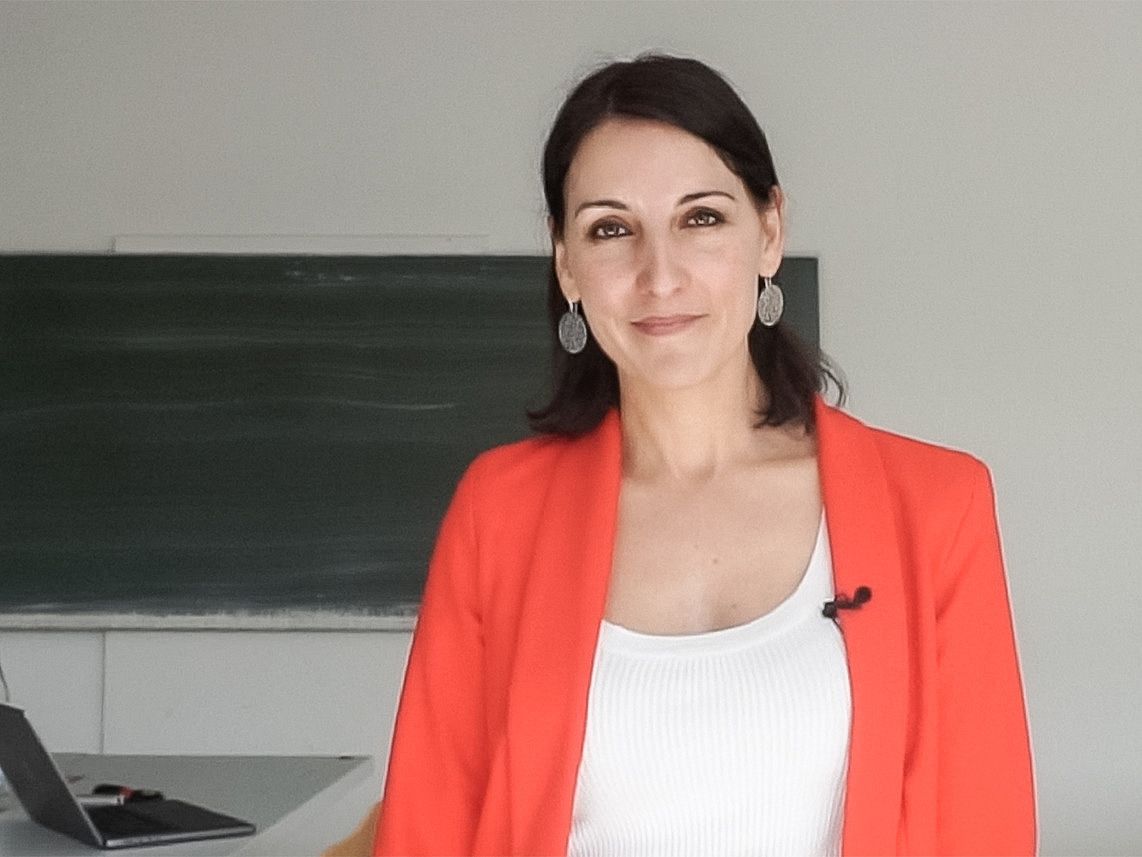
Prof. Dr. Kerstin Bartscherer has held the Chair of Animal Physiology at Osnabrück University since April 2021 and received funding to establish a new branch of research into skin regeneration as part of the Volkswagen Foundation's "Momentum" program in 2025.
Prof. Bartscherer, in one sentence: What are you researching?
We are trying to understand why some animals can regenerate tissue without scarring after injury and other animals - including humans - cannot or can only regenerate to a limited extent. Spiny mice, for example, can shed part of their back skin under slight mechanical stress and regrow it. We compare different animals with each other and how their cells react to injury. Hopefully we will one day be able to transfer regeneration mechanisms to humans. That was more than one sentence (laughs).
What is regeneration?
Regeneration is the restoration of damaged tissue. This involves rebuilding the cellular structure and function of complex tissue, for example skin. In most mammals, however, tissue heals with scarring. Scars consist of a stiff collagen network, which in turn restricts the function of the tissue and prevents regeneration.
Your research is currently focusing on skin regeneration in spiny mice. What is the secret of these mice?
We know that the spiny mouse has special cell types that are likely to enable scar-free regeneration by activating certain genes. We are currently working on characterizing these cell types more precisely and reproducing them from human stem cells.
Although spiny mice and humans are mammals, they are still genetically far apart. How can your results be transferred to humans in the future?
We hope that our research with spiny mice will enable us to uncover regenerative mechanisms that can be translated into cell therapies. To transfer our findings, we are already using a new technology with which we can grow human skin from stem cells - so-called skin organoids. We can then study the behavior of regenerative cells in human tissue.
How exactly does this work?
Basically, we make use of the property of stem cells that can develop into any type of cell in the body. Depending on which growth factors we add to the stem cells, they become muscle cells, intestinal cells or even skin cells. The cells organize themselves into the corresponding tissues. For example, skin organoids contain epidermal and dermal cell types - i.e. cells from the upper and lower skin layers - as well as nerve cells, hair follicles and glands. We use skin organoids not only for our regeneration research, but also to investigate the development of melanoma. The way this works is that we use patient-derived stem cells to produce patient-specific skin organoids. The stem cells contain the same gene mutations that are responsible for the cancer in the patient. We then want to investigate the development of cancer in the skin organoids and find ways of combating melanoma.
Let's assume that your regeneration research can soon be transferred to humans. Where could such cell therapies be used?
For example, for burn victims, as was the case again on New Year's Eve in Crans-Montana. Our skin consists of several layers that protect us from intruders and regulate our body temperature. Severe burns also damage the deeper layers of the skin. The result is massive scarring of the entire tissue. In the case of small-area burns, the patient's own skin can be used for transplantation; in the case of large-area burns, the options are limited. Our aim is to contribute to therapies that allow the damaged skin to regenerate itself without scarring.
What are the challenges in your research?
Approval processes, whether these are university conversion projects or official applications for animal experiments, take a very, very long time, which severely restricts our research with spiny mice. As desirable as animal-free research is, human models, such as skin organoids, are still immature. For example, blood vessels and interaction with the immune system are missing. Regulations state that applications in humans must first be tested on animals. The sooner we researchers are allowed to pursue our research, the sooner science will be able to dispense with animal testing.
Personal details: Prof. Dr. Kerstin Bartscherer came to Osnabrück as Professor of Animal Physiology in April 2021 after working at the Max Planck Institute for Molecular Biomedicine in Münster and the Hubrecht Institute in Utrecht. Her research focuses primarily on the scar-free regeneration of skin tissue. Part of her research is embedded in the Collaborative Research Center 1557 "Functional plasticity encoded by cellular membrane networks".
About the series: In the interview series "UOS asks questions", experts from Osnabrück University talk to the press office about their research and take a stand on current and everyday topics. From politics to education, from art to AI - UOS asks questions.
Further information for the media:
Prof. Dr. Kerstin Bartscherer
Department of Animal Physiology, Osnabrück University