Smartphones have long been a part of children's lives - even at primary school age. While politicians, academics and the public are intensively discussing possible bans in schools, one key question often remains unanswered: What do the children themselves actually think about it?
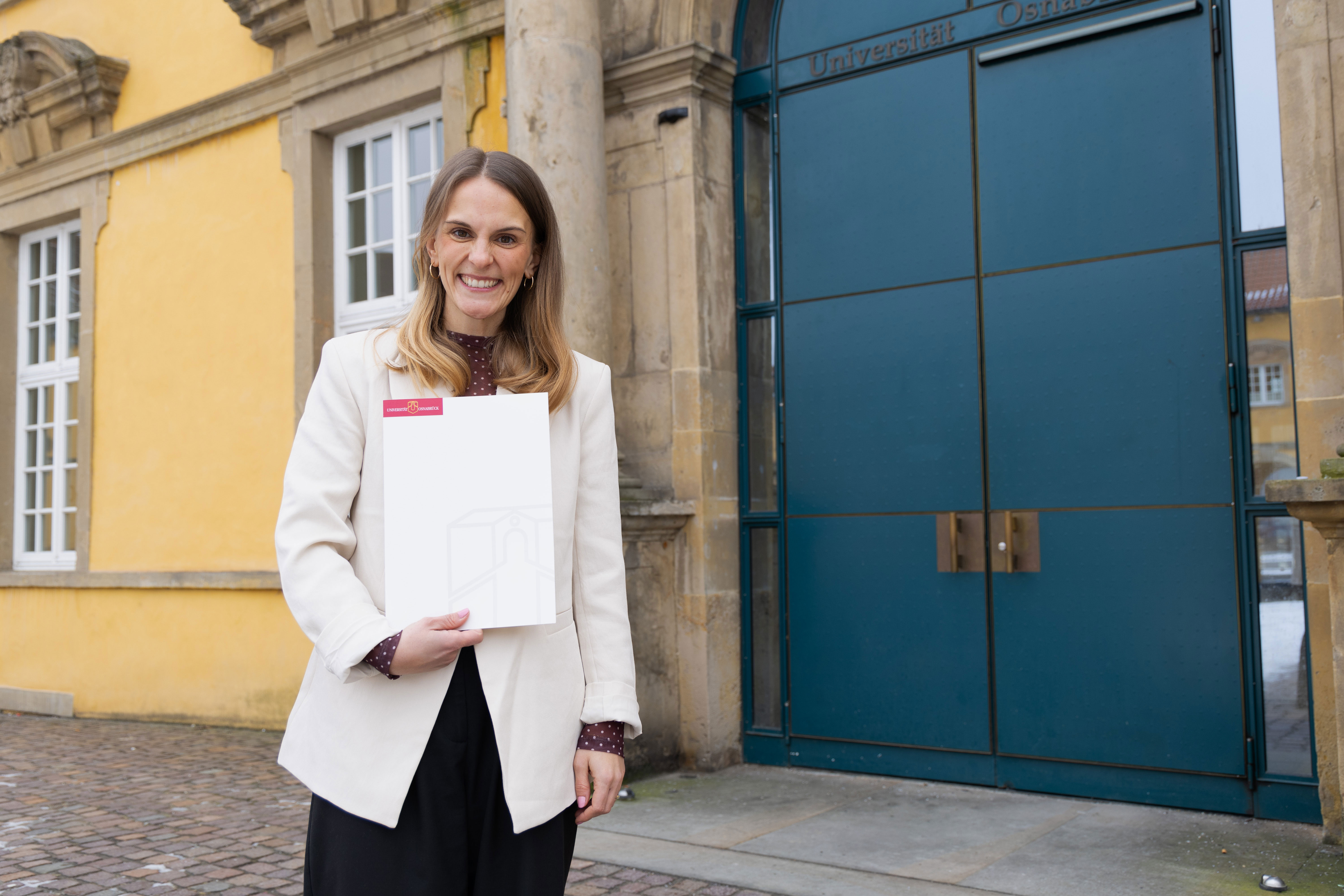
Noel Stratmann, a student on the Bachelor's degree course in Education, Training and Teaching at Osnabrück University, has now investigated this question. For his Bachelor's thesis entitled "Smartphone ban at elementary school? What do the children actually think?", the 27-year-old surveyed pupils in years four and six. A total of 377 pupils from Lower Saxony and North Rhine-Westphalia took part in the survey, including 156 primary school children and 221 sixth-graders. This is a random sample that does not claim to be representative of all pupils in Germany. Instead, the results provide insights into the perspectives of the children surveyed. The survey was conducted using a standardized questionnaire in the summer of 2025.
Why these age groups in particular? "The fourth-graders would be directly affected by a ban," says Noel Stratmann. "And the children in Year 6 are still close enough to elementary school to be able to reflect on their time at elementary school. At the same time, however, they have built up enough distance and experience to be able to categorize some aspects differently."
There are only two years between fourth and sixth grade, but they are crucial: Many children receive their first cell phone when they move on to secondary school. "88 percent of those surveyed stated that they had their own smartphone," says the Osnabrück student. On average, pupils received their first cell phone at the age of nine.
Overall, 63.9% of the children and young people surveyed were in favor of a smartphone ban. 19.9 percent rejected it. The rest were unsure. Among primary school children, who would be directly affected by the ban, 46.4% voted in favor of introducing a smartphone ban in elementary school. Among sixth-graders, 76.4 percent were in favor of a ban.
Doesn't it stand to reason that children who would not be affected by a ban would be more likely to vote in favor of one? "This is a point that could certainly be explored in more depth in a Master's thesis," says Prof. Dr. Ferdinand Stebner, who supervised the Bachelor's thesis at Osnabrück University. Nevertheless, the school teacher finds the results of the survey remarkable: for example, significantly more girls - just under 70% - are in favor of a smartphone ban than boys (around 57%).
Overall, the most frequently cited reason for a smartphone ban (around 56%) was "distraction and disruption in lessons". "Contact with parents and in emergencies" was cited by 48.5% of respondents as an argument against a ban.
"While there have been numerous studies on the effects of smartphone bans, the views of primary school children have hardly been systematically recorded to date," says Prof. Dr. Ferdinand Stebner. "The results also show that children are very capable of formulating reflective arguments."
This point also surprised Noel Stratmann: "Many children made their own suggestions for rules, for example certain technical settings such as a school lockdown or a no-go zone on the school grounds. The pupils are definitely aware of the issues." The study shows that children want to have a say - and they can.
Further information for the media:
Prof. Dr. Ferdinand Stebner, Osnabrück University
Institute of Education